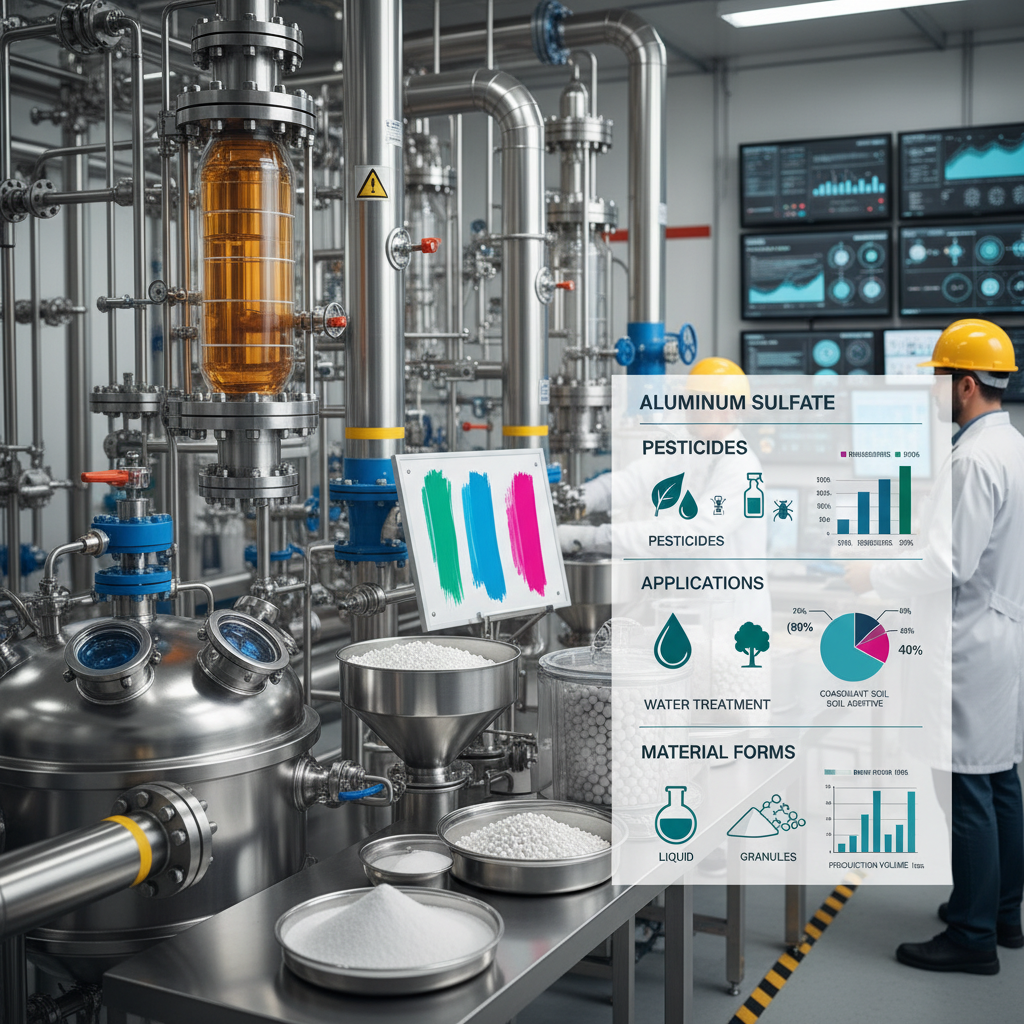
In the complex world of industrial chemistry and agricultural optimization, aluminum sulfate stands as a cornerstone compound with diverse utility. From critical water purification processes to the precise adjustment of soil pH for high-yield farming, this chemical agent provides the stability and efficiency required by modern manufacturing and environmental management. Understanding its chemical properties is not just a matter of technical interest but a necessity for industries aiming to balance productivity with ecological responsibility.
Globally, the demand for high-purity aluminum sulfate is driven by the escalating need for clean drinking water and the intensification of agricultural practices. As urbanization expands and the pressure on food security grows, the ability to manage water quality and soil health becomes paramount. This compound serves as an essential coagulant and acidifier, bridging the gap between raw natural resources and refined, usable outputs.
By exploring the multifaceted roles of this chemical, professionals in the fungicide, herbicide, and water treatment sectors can unlock new efficiencies in their operations. Whether it is improving the efficacy of a plant growth regulator or ensuring the clarity of industrial effluent, the strategic application of this sulfate salt ensures long-term operational viability and adherence to international safety standards.
Global Industrial Relevance of Aluminum Sulfate
The global footprint of aluminum sulfate is expansive, intersecting with municipal infrastructure and large-scale agriculture. According to industrial trends aligned with ISO standards for water quality, the use of aluminum-based coagulants remains the most cost-effective method for removing suspended solids from potable water. This makes the compound indispensable for developing nations striving to meet World Health Organization (WHO) guidelines for safe drinking water.
Beyond water, the chemical's role in the pesticide and plant growth regulator sectors is critical. By modifying the acidity of the environment, it ensures that fungicides and herbicides remain stable and active, preventing premature degradation. This systemic reliability allows farmers to optimize crop yields while minimizing the volume of chemical runoff, addressing the global challenge of agricultural sustainability.
Technical Definition and Chemical Composition
In simple terms, aluminum sulfate is a chemical compound consisting of aluminum, sulfur, and oxygen, typically appearing as a white crystalline powder or a clear liquid solution. Chemically represented as Al₂(SO₄)₃, it acts as a strong Lewis acid, which allows it to react efficiently with alkaline substances and colloidal particles in aqueous environments.
This specific molecular structure is what enables its primary function as a coagulant. When added to water, it neutralizes the negative electrical charges of suspended particles, causing them to clump together into larger "flocs" that can be easily filtered out. This process is fundamental to the operation of nearly every municipal water treatment plant worldwide.
In the context of modern humanitarian needs, the availability of stable, high-grade aluminum sulfate is a matter of public health. Its ability to rapidly clarify turbid water during flood relief or in remote industrial zones ensures that water-borne diseases are mitigated, proving that a simple inorganic salt can have a profound impact on human survival.
Core Performance Factors of Aluminum Sulfate
The efficacy of aluminum sulfate is largely determined by its purity and solubility. High-grade industrial versions ensure that there are minimal heavy metal contaminants, which is critical when the product is used in the production of plant growth regulators or food-grade water treatment.
Scalability and cost-efficiency are the two primary drivers for its widespread adoption. Because aluminum sulfate can be produced in massive quantities using readily available bauxite or aluminum hydroxide, it remains the most economically viable option for large-scale soil acidification in commercial forestry and agriculture.
Furthermore, the reactivity of the compound—specifically its ability to maintain a consistent pH drop—allows for precise control in chemical manufacturing. This reliability ensures that when it is mixed with other chemical products, the resulting formulation remains stable during transport and storage.
Comparative Application Efficiency
When evaluating the performance of aluminum sulfate against alternative coagulants or acidifiers, several metrics emerge. While organic polymers may offer higher flocculation density, they often come with a prohibitive cost. In contrast, the inorganic nature of this sulfate ensures a rapid reaction time and ease of dosing in automated systems.
For industrial users, the balance between purity and cost is the deciding factor. Whether applied as a liquid solution for immediate reaction or a solid powder for long-term storage, the consistent performance of the compound allows for predictable outcomes in both water treatment and agricultural soil management.
Comparative Efficiency of Aluminum Sulfate Methods
Global Use Cases in Water and Soil
In real-world contexts, aluminum sulfate is deployed in critical infrastructure. In the United States and Europe, it is a staple in municipal water treatment plants to remove organic matter and turbidity. In Southeast Asia, it is frequently used in the aquaculture industry to treat pond water, ensuring a healthy environment for shrimp and fish by controlling algae blooms.
Furthermore, in the agricultural heartlands of Brazil and India, this compound is used to lower the pH of alkaline soils. This process is essential for the uptake of micronutrients like iron and manganese, which are otherwise locked in the soil. By applying aluminum sulfate, farmers can significantly increase the efficacy of their herbicides and fertilizers, ensuring a higher return on investment.
Long-Term Economic and Ecological Value
The long-term value of aluminum sulfate lies in its ability to provide a low-cost, high-impact solution for environmental remediation. From an economic perspective, its affordability allows small-scale farmers and municipal governments in developing regions to access professional-grade water and soil treatment without bankrupting their budgets.
Logically, the stability of the compound reduces the risk of hazardous leaks during transport, enhancing the safety of the supply chain. Emotionally, the trust that a community has in their drinking water—knowing it has been treated with a proven, reliable agent—cannot be overstated. It provides a sense of dignity and security to populations previously plagued by contaminated water sources.
Sustainability is also achieved through precise dosing. When used correctly, aluminum sulfate prevents the over-application of other, more toxic chemicals. By optimizing the soil environment first, fewer synthetic fungicides are needed, creating a positive feedback loop that protects local biodiversity and groundwater quality.
Future Innovations in Sulfate Technology
The future of aluminum sulfate is being shaped by the drive toward "Green Chemistry." Researchers are currently exploring ways to synthesize this compound from industrial waste products, such as aluminum scrap, to create a circular economy. This would reduce the reliance on mining and lower the carbon footprint associated with chemical production.
Digital transformation is also playing a role. The integration of IoT (Internet of Things) sensors in water treatment plants now allows for "smart dosing" of aluminum sulfate. By analyzing water turbidity in real-time, AI-driven systems can adjust the flow of the chemical to the exact milligram, eliminating waste and optimizing costs.
Moreover, the development of nano-encapsulated sulfate delivery systems in agriculture promises to make soil acidification more targeted. This innovation will allow for the slow release of the compound, ensuring that soil pH remains stable for longer periods, thereby reducing the frequency of application and minimizing the ecological impact.
Analysis of Aluminum Sulfate Application across Different Sectors
| Industrial Sector |
Primary Function |
Efficiency Score (1-10) |
Environmental Impact |
| Municipal Water |
Coagulation/Clarification |
9.5 |
Low (with proper sludge mgmt) |
| Commercial Farming |
Soil pH Reduction |
8.8 |
Moderate (local acidification) |
| Paper Manufacturing |
Sizing Agent |
8.2 |
Low to Moderate |
| Aquaculture |
Algae Control |
7.9 |
Low (controlled use) |
| Chemical Synthesis |
Catalyst/Acidifier |
8.5 |
Low (contained systems) |
| Wastewater Treatment |
Phosphorus Removal |
9.0 |
Very Low |
FAQS
It works as a coagulant by neutralizing the negative charges of fine particles and organic matter in the water. This causes these particles to stick together and form larger clumps called "flocs," which then sink to the bottom or are filtered out, leaving the water clear and free of suspended solids.
It is primarily used for alkaline soils (high pH). It is not recommended for already acidic soils, as further lowering the pH could lead to aluminum toxicity, which inhibits root growth. Always perform a soil test before application to ensure the pH adjustment is necessary.
Yes, it is commonly used by home gardeners to maintain acid-loving plants like hydrangeas or azaleas. However, it should be applied according to package directions to avoid over-acidifying the soil, and gloves should be worn to prevent skin irritation from its acidic nature.
While often used interchangeably, "alum" typically refers to potassium aluminum sulfate. Aluminum sulfate is the more concentrated industrial version used for large-scale water treatment and agriculture, whereas potassium alum is more common in food processing and cosmetic applications.
It should be stored in a cool, dry, and well-ventilated area in original airtight containers. Because it is hygroscopic (absorbs moisture from the air), keeping it sealed prevents clumping and maintains the chemical potency for future applications.
Importing requires compliance with the destination country's chemical regulations (such as REACH in the EU). It is essential to provide a detailed Material Safety Data Sheet (MSDS) and ensure the product is packaged according to international maritime or air transport hazardous materials standards.
Conclusion
In summary, aluminum sulfate is an indispensable tool across multiple industrial landscapes, from ensuring the purity of our drinking water to optimizing the productivity of our global food systems. Its unique ability to act as both a powerful coagulant and a reliable pH modifier makes it a cost-effective solution for complex environmental challenges. By balancing technical purity with strategic application, industries can leverage this compound to achieve higher operational efficiency and improved ecological outcomes.
Looking forward, the integration of green synthesis and smart dosing technology will further enhance the sustainability of this chemical's use. As we move toward a more resource-constrained world, the efficient management of water and soil through proven agents like aluminum sulfate will be critical. We encourage industry professionals to adopt precision-application methods to maximize the benefits of this compound while minimizing its environmental footprint. Visit our website for more information: www.hbjrain.com