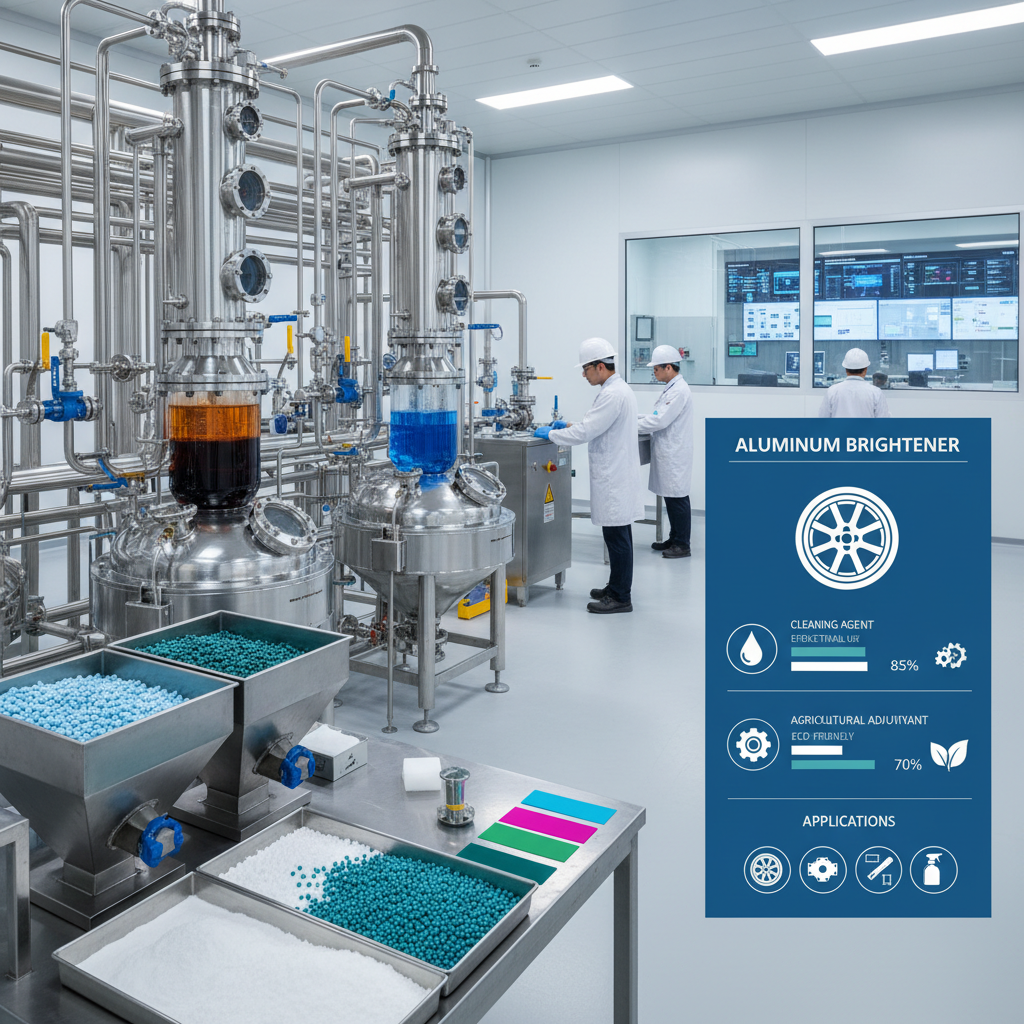
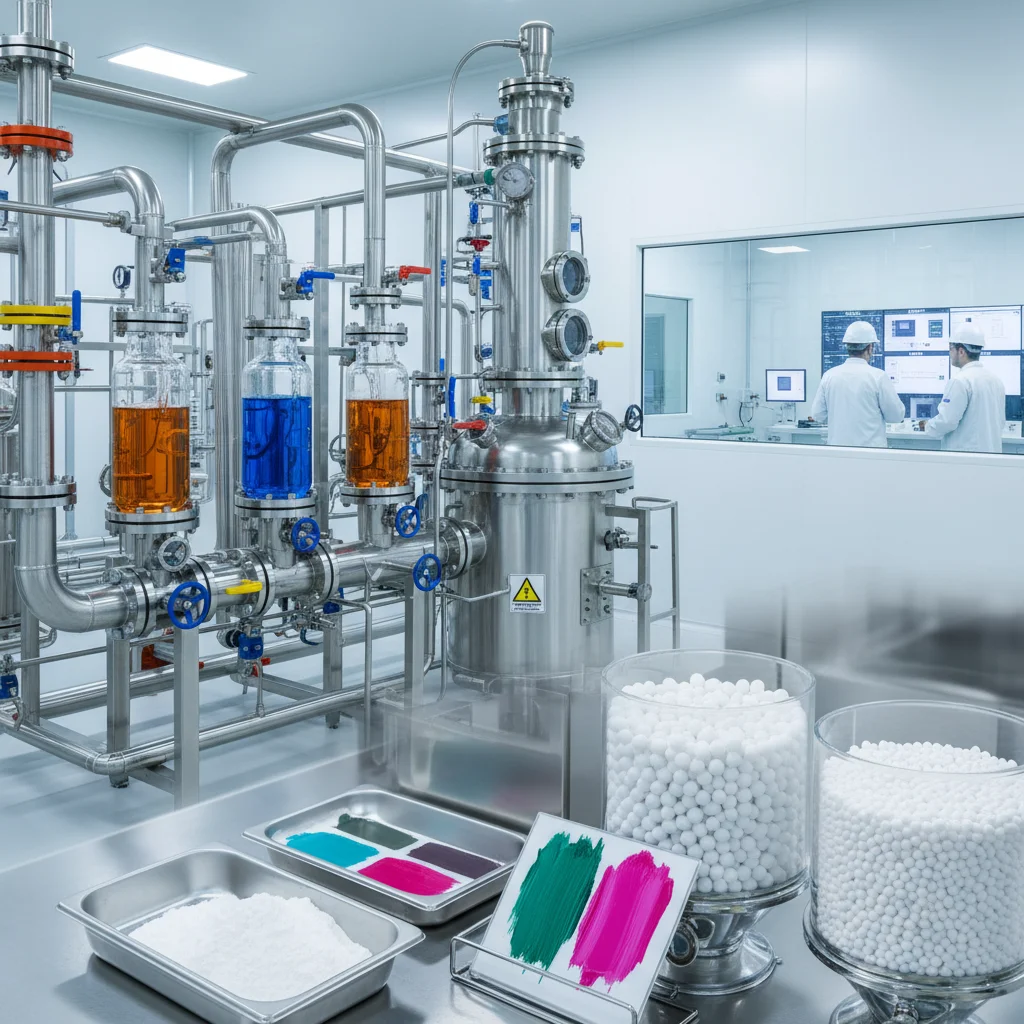
In the demanding world of metal finishing and industrial maintenance, achieving a flawless surface is not just about aesthetics—it is about durability and corrosion resistance. An aluminum brightener serves as a critical chemical agent designed to remove oxidation, contaminants, and dullness from aluminum surfaces, restoring their natural luster and preparing them for further protective coatings.
Globally, the demand for high-performance surface treatments has surged as aluminum becomes the material of choice for aerospace, automotive, and sustainable architecture due to its lightweight properties. However, the tendency of aluminum to form a stubborn oxide layer requires specialized chemistry. A professional-grade aluminum brightener ensures that these surfaces maintain their structural integrity while achieving a mirror-like or satin finish.
Understanding the nuances of these chemical agents allows manufacturers to reduce waste, lower labor costs, and extend the lifecycle of their products. By integrating advanced brightening solutions, industries can bridge the gap between raw industrial output and high-end commercial quality, ensuring that every aluminum component meets rigorous international standards.
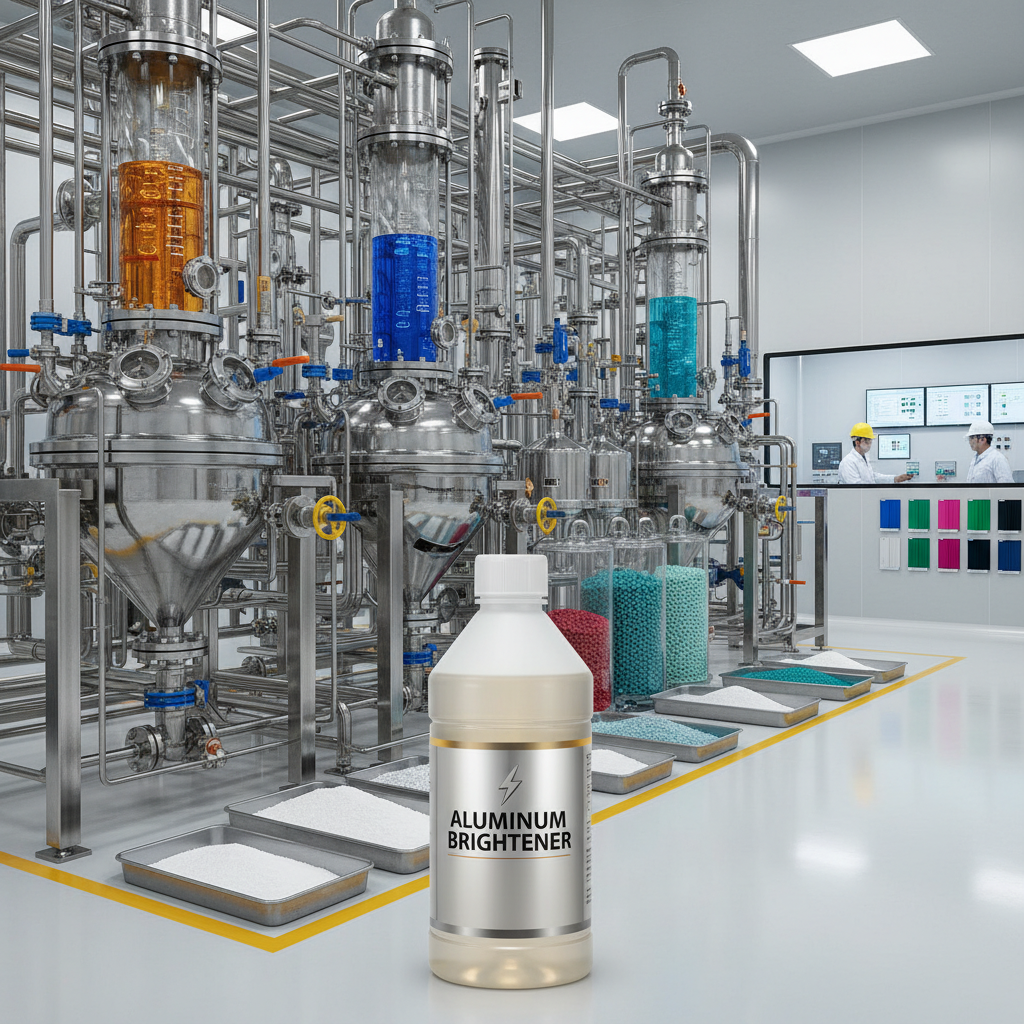
Global Industry Context of Aluminum Brighteners
The global aluminum market has seen exponential growth, with ISO standards increasingly emphasizing the importance of surface quality for fatigue resistance and aesthetic longevity. As emerging economies expand their infrastructure, the need for a reliable aluminum brightener has moved from a luxury "polishing" step to a mandatory industrial requirement for quality control.
The primary challenge facing the industry today is the balance between aggressive chemical action and material preservation. Over-etching can lead to pitting and structural weakness, while under-treating leaves the surface susceptible to environmental corrosion. This delicate balance is where modern chemical engineering provides the solution, creating formulas that selectively target oxides without compromising the base metal.
Defining the Mechanism of Aluminum Brightener
At its core, an aluminum brightener is a specialized chemical composition—often acid-based or utilizing proprietary chelating agents—designed to chemically dissolve the aluminum oxide layer (Al2O3) and other surface contaminants. Unlike mechanical polishing, which removes material through abrasion, chemical brightening works at a molecular level to uncover the fresh, lustrous metal beneath.
This process is essential for modern industry because it provides a uniform surface finish over complex geometries that manual sanding cannot reach. Whether it is the interior of a heat exchanger or the intricate curves of an automotive trim, the chemical action ensures total coverage, which is vital for subsequent anodizing or painting processes.
Beyond simple aesthetics, the use of these agents addresses humanitarian and safety needs in critical infrastructure. By removing surface defects, an aluminum brightener helps in the early detection of structural cracks during inspections, ensuring that aircraft components and bridge supports remain safe for public use.
Core Components for Optimal Brightening Performance
The effectiveness of an aluminum brightener depends heavily on its chemical stability and the precision of its active ingredients. Key factors such as pH balance and the concentration of surfactants determine how effectively the agent penetrates the oxide layer without causing "burning" or uneven spotting on the metal surface.
Scalability and cost-efficiency are also paramount. Industrial users require solutions that can be applied in large dipping tanks or automated spray systems. A high-quality aluminum brightener must maintain its potency over multiple cycles of use, reducing the frequency of tank replacements and minimizing hazardous chemical waste.
Finally, durability of the finished surface is the ultimate goal. By integrating corrosion inhibitors within the brightening formula, the agent does more than just clean; it creates a chemically receptive surface that bonds more strongly with protective sealants, ensuring the aluminum remains bright even in harsh saline or industrial environments.
Efficiency Metrics of Different Brightening Methods
When selecting an aluminum brightener, manufacturers often compare various formulations based on their "Brightening Index"—a measure of light reflectance and surface smoothness. Different chemical paths, such as phosphoric acid blends versus organic acid alternatives, offer varying levels of aggression and finish quality.
The following data illustrates the comparative performance of five common brightening approaches across key industrial metrics, highlighting why certain high-end formulas are preferred for precision aerospace work compared to general construction aluminum.
Performance Analysis of Aluminum Brightener Formulations
Global Applications Across Key Industrial Sectors
The application of an aluminum brightener is ubiquitous in high-precision engineering. In the automotive sector, it is used to treat alloy wheels and engine components, ensuring a high-gloss finish that resists road salt and grime. Similarly, in the aerospace industry, brightening is a critical step before the application of cladding, where any surface impurity could lead to catastrophic structural failure.
Beyond heavy industry, these solutions are vital in remote industrial zones and marine environments. For example, in the maintenance of offshore oil rigs or coastal wind turbines, specialized brightening agents are used to remove salt-induced oxidation, restoring the protective properties of the aluminum housing and preventing deep-seated corrosion in high-humidity regions.
Long-Term Value and Sustainability Advantages
Investing in a premium aluminum brightener provides significant long-term economic value. By reducing the need for repeated manual polishing, companies can slash labor hours and decrease the physical wear on their machinery. The logical result is a lower "total cost of ownership" for aluminum assets, as the surface remains pristine for longer durations.
From a sustainability perspective, modern brighteners are evolving to be more eco-friendly. The shift toward biodegradable surfactants and the reduction of fluoride-based chemicals ensure that factories can meet strict environmental regulations without sacrificing performance. This transition reflects a commitment to "green chemistry," where efficiency and ecology coexist.
Ultimately, the value lies in trust and reliability. When a consumer sees a perfectly brightened aluminum finish, it signals quality and precision. This emotional connection to a "new" and "clean" look enhances brand perception, proving that a simple chemical treatment can have a profound impact on market competitiveness.
Future Innovations in Surface Treatment Technology
The future of the aluminum brightener market is being shaped by digital transformation and nanotechnology. We are seeing the rise of "smart chemicals" that change color when the oxide layer has been fully removed, eliminating the guesswork and preventing over-etching. This automation of the chemical process reduces human error and ensures a consistent finish across millions of parts.
Furthermore, the integration of nano-coatings directly into the brightening phase is a growing trend. Imagine a solution that brightens the aluminum and simultaneously deposits a molecularly thin layer of hydrophobic material. This "dual-action" approach would revolutionize maintenance, as surfaces would not only be bright but also self-cleaning and highly resistant to water.
As global policies push for a circular economy, the focus is shifting toward the brightening of recycled aluminum. Recycled alloys often have more impurities than primary aluminum; therefore, the next generation of brightening agents will be engineered to handle a wider variety of alloy compositions, ensuring that sustainable materials can look just as good as virgin metal.
Comparative Analysis of Aluminum Brightener Technical Specifications
|
Formula Type
|
Removal Rate (μm/min)
|
Eco-Compatibility Score
|
Surface Gloss Level
|
| Standard Acid-Mix |
1.2 |
4/10 |
Medium |
| High-Precision Organic |
0.8 |
8/10 |
Ultra-High |
| Rapid-Action Industrial |
2.5 |
3/10 |
High |
| Bio-Based Brightener |
0.6 |
10/10 |
Medium |
| Hybrid Nano-Solution |
1.1 |
7/10 |
Ultra-High |
| Alloy-Specific Blend |
1.5 |
6/10 |
High |
FAQS
While a standard cleaner removes surface dirt, oils, and grease, an aluminum brightener specifically targets the chemical oxide layer that forms on the metal. It uses an etching process to strip away dull oxidation, restoring the actual metallic luster of the aluminum, which a simple soap or degreaser cannot achieve.
Yes, if used incorrectly. Over-exposure to a strong aluminum brightener can lead to "burning," which appears as white spots or pitting. This is why professional-grade products include inhibitors and require strict adherence to dwell times and temperature controls to ensure a safe, uniform finish.
Absolutely. Because an aluminum brightener is chemically active, leaving residues on the surface can lead to localized corrosion or streaks. A thorough rinse with deionized or clean water is essential to neutralize the surface before applying any protective sealants or paints.
Most 6000-series (architectural) and 5000-series (marine) alloys respond exceptionally well. However, the specific formula of the aluminum brightener may need to be adjusted for 2000 or 7000-series aerospace alloys to avoid reacting with high copper or zinc content.
Yes, there is a growing trend toward organic acid blends and chelating agents that reduce toxicity and environmental impact. Many modern aluminum brightener products are now phosphate-free and biodegradable, making them suitable for factories with strict wastewater treatment requirements.
This depends on the volume of parts processed. As an aluminum brightener works, it accumulates aluminum salts in the solution, which eventually slows the reaction. Regular titration tests are recommended to determine when to "bleed" the tank or replace the chemistry entirely for optimal results.
Conclusion
In summary, the application of a high-quality aluminum brightener is a pivotal step in ensuring the longevity, safety, and aesthetic appeal of aluminum components. From the molecular removal of oxide layers to the broad industrial applications in aerospace and automotive sectors, these chemical agents bridge the gap between raw metal and a refined, professional product. By balancing aggressive cleaning power with material preservation and environmental sustainability, manufacturers can achieve superior results that stand the test of time.
Looking forward, the integration of nanotechnology and smart-monitoring systems will likely make the brightening process more efficient and less wasteful. For businesses aiming to maintain a competitive edge in surface quality and structural reliability, investing in advanced chemical treatments is no longer optional—it is a strategic necessity. We invite you to explore our professional solutions and elevate your finishing standards. Visit our website: www.hbjrain.com