0%

Table of Contents

3 o ethyl ascorbic acid, a stable and potent derivative of Vitamin C, is rapidly gaining prominence in cosmetic and pharmaceutical applications. Unlike L-Ascorbic Acid, which is notoriously unstable in formulations, 3 o ethyl ascorbic acid exhibits excellent stability against oxidation, ensuring prolonged efficacy. Its ability to penetrate the skin barrier efficiently makes it a superior choice for delivering the benefits of Vitamin C – brightening, antioxidant protection, and collagen synthesis – directly to where they are needed.

The global demand for effective skincare ingredients is experiencing robust growth, driven by an aging population and increased awareness of preventative skincare. Data from the global cosmetics market indicates a projected value of over $480 billion by 2027, with Vitamin C derivatives representing a significant and expanding segment. 3 o ethyl ascorbic acid addresses a crucial need in this market: a stable, bioavailable form of Vitamin C that can be incorporated into a wide range of formulations without compromising efficacy.

Beyond cosmetics, 3 o ethyl ascorbic acid shows promise in pharmaceutical applications, particularly in formulations aimed at wound healing and immune system support. Its antioxidant properties are valuable in combating oxidative stress, a key factor in various chronic diseases. The increasing research focused on the therapeutic potential of Vitamin C and its derivatives reinforces the importance of exploring stable forms like 3 o ethyl ascorbic acid.
3 o ethyl ascorbic acid

Introduction to 3 o ethyl ascorbic acid
3 o ethyl ascorbic acid

3 o ethyl ascorbic acid is a highly effective and stable derivative of L-Ascorbic Acid (Vitamin C). It’s designed to overcome the inherent instability of traditional Vitamin C forms, which readily degrade upon exposure to air, light, and water. This degradation reduces the effectiveness of formulations containing L-Ascorbic Acid, requiring higher concentrations and often leading to discoloration and reduced shelf life.

The development of 3 o ethyl ascorbic acid represents a significant advancement in Vitamin C technology. Its unique chemical structure imparts enhanced stability without sacrificing the potent antioxidant and skin-brightening properties associated with Vitamin C. This makes it an ideal ingredient for a diverse range of cosmetic and pharmaceutical products aiming to deliver noticeable results.

Understanding the Chemical Properties of 3 o ethyl ascorbic acid

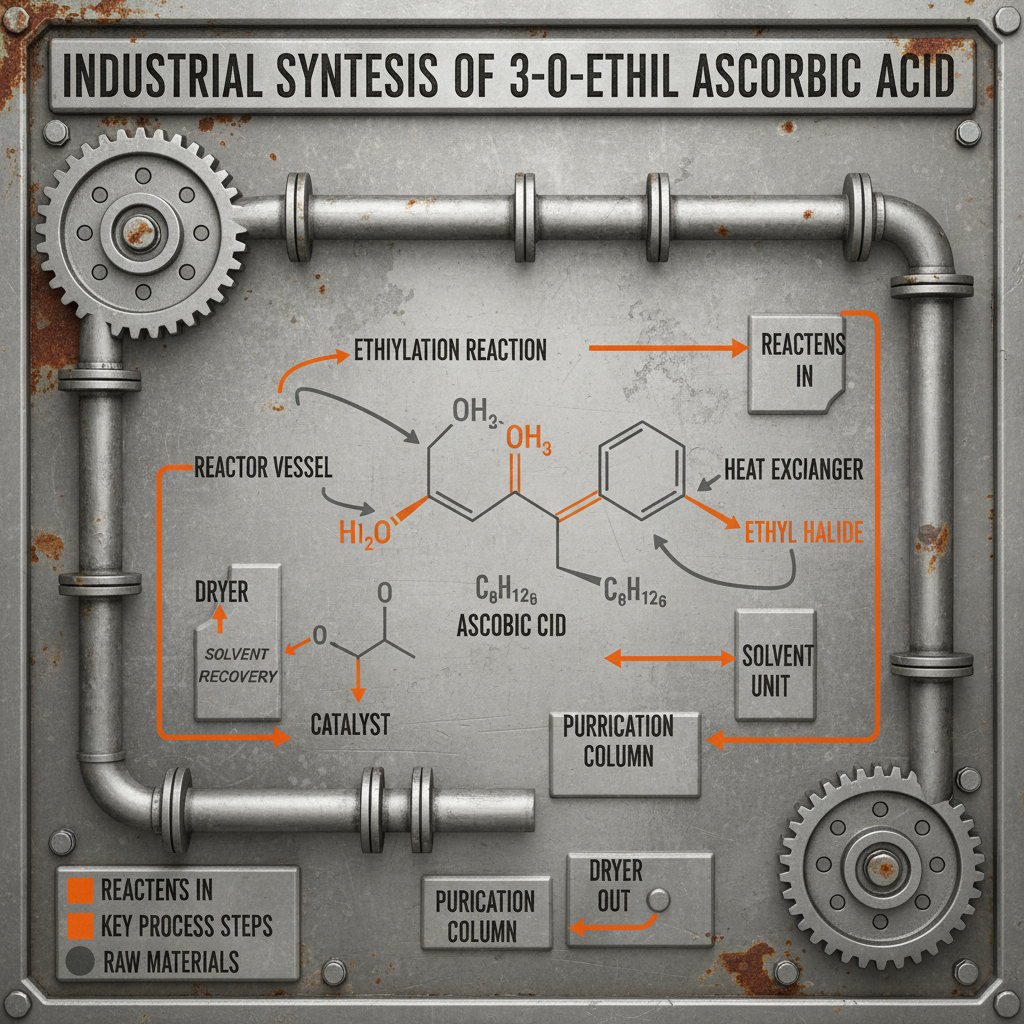
Chemically, 3 o ethyl ascorbic acid is an ethylated derivative of ascorbic acid. The addition of an ethyl group to the ascorbic acid molecule alters its properties, significantly enhancing its lipid solubility and membrane permeability. This allows for deeper penetration into the skin layers, maximizing its biological activity. The ethylation also protects the ascorbic acid moiety from oxidation.

Compared to L-Ascorbic Acid, 3 o ethyl ascorbic acid exhibits a much higher resistance to oxidation in aqueous solutions. This stability is crucial for maintaining the efficacy of the ingredient throughout the product’s shelf life and after application to the skin. Formulators can rely on 3 o ethyl ascorbic acid to deliver consistent and predictable results.

The molecular weight of 3 o ethyl ascorbic acid is slightly higher than that of L-Ascorbic Acid, influencing its diffusion rate and interaction with other formulation components. This difference needs to be considered during formulation development to optimize its incorporation and performance.

Stability and Bioavailability of 3 o ethyl ascorbic acid

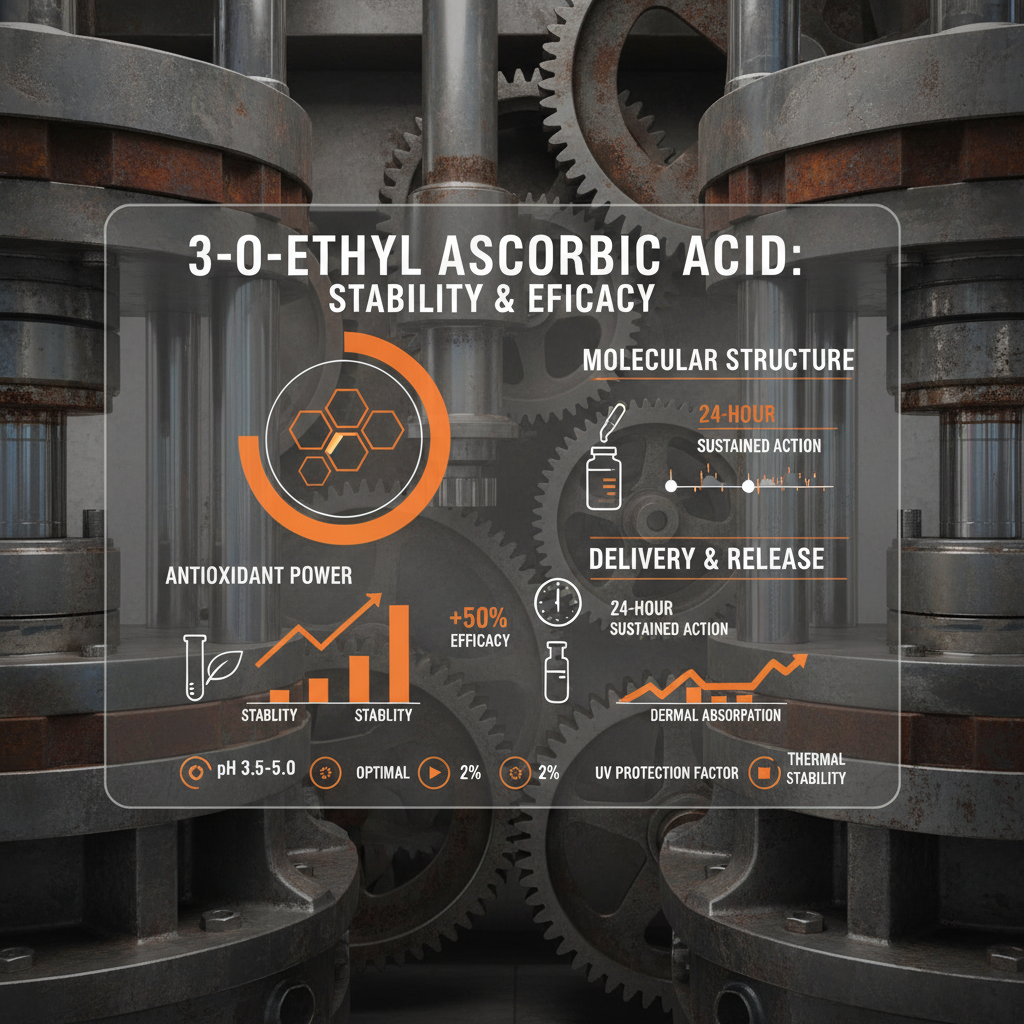
The enhanced stability of 3 o ethyl ascorbic acid is a cornerstone of its appeal. Unlike L-Ascorbic Acid, which requires specialized packaging and formulations to prevent oxidation, 3 o ethyl ascorbic acid remains stable in standard cosmetic and pharmaceutical formulations for extended periods. This reduces formulation complexity and manufacturing costs.

Bioavailability, the extent to which a substance is absorbed and utilized by the body, is another critical advantage of 3 o ethyl ascorbic acid. Its increased lipid solubility facilitates its passage through the skin’s lipid barrier, ensuring a higher concentration reaches the target cells. Studies demonstrate superior bioavailability compared to traditional Vitamin C forms.

This improved bioavailability translates to enhanced efficacy. A smaller amount of 3 o ethyl ascorbic acid can deliver comparable or even superior results to larger amounts of L-Ascorbic Acid, reducing the risk of potential irritation or sensitivity associated with high concentrations of Vitamin C.

Key Benefits of Using 3 o ethyl ascorbic acid in Formulations

One primary benefit of utilizing 3 o ethyl ascorbic acid is its enhanced stability. This stability extends the shelf life of products and ensures the active ingredient maintains its potency over time, minimizing waste and maximizing value for consumers.

The superior bioavailability of 3 o ethyl ascorbic acid means that a lower concentration can be used to achieve comparable or better results than L-Ascorbic Acid. This reduces the potential for skin irritation and sensitivity, making it suitable for a broader range of skin types.

Comparative Efficacy of Vitamin C Derivatives

Global Applications of 3 o ethyl ascorbic acid Across Industries

The primary application of 3 o ethyl ascorbic acid lies within the cosmetic industry, incorporated into serums, creams, and lotions designed for skin brightening, anti-aging, and antioxidant protection. Its stability allows for a wide range of formulation possibilities, catering to diverse consumer preferences.

Beyond cosmetics, research is exploring the potential of 3 o ethyl ascorbic acid in pharmaceutical applications, specifically in wound healing and the treatment of inflammatory skin conditions. Its antioxidant properties may also offer benefits in protecting against UV-induced skin damage.

Advantages and Long-Term Value Proposition of 3 o ethyl ascorbic acid

The long-term value of 3 o ethyl ascorbic acid stems from its consistent performance and reduced formulation challenges. Formulators can achieve predictable results, minimizing product failures and maximizing customer satisfaction. This reliability translates to brand loyalty and a competitive advantage.

From a sustainability perspective, the enhanced stability of 3 o ethyl ascorbic acid reduces product waste due to degradation, contributing to a more responsible manufacturing process. Its efficacy at lower concentrations also minimizes the overall amount of active ingredient required, further reducing environmental impact.

The enhanced bioavailability and reduced irritation potential of 3 o ethyl ascorbic acid promote consumer well-being, offering effective skincare solutions without compromising skin health. This focus on both efficacy and safety builds trust and strengthens brand reputation.

Future Trends and Innovations in 3 o ethyl ascorbic acid Research

Ongoing research is focused on optimizing the delivery systems for 3 o ethyl ascorbic acid, exploring encapsulation technologies and liposomal formulations to further enhance its penetration and targeted release.

Another emerging trend is the combination of 3 o ethyl ascorbic acid with other potent antioxidants and active ingredients to create synergistic formulations with amplified benefits. This approach aims to address multiple skin concerns simultaneously, offering comprehensive skincare solutions.

The application of biotechnology and genetic engineering may lead to the development of enhanced production methods for 3 o ethyl ascorbic acid, potentially reducing manufacturing costs and increasing availability.

Summary of Key Research Areas for 3 o ethyl ascorbic acid

Research Area Focus Potential Benefits Current Progress
Encapsulation Technology Developing micro- and nano-encapsulation methods Improved stability, targeted delivery, enhanced bioavailability Proof-of-concept studies demonstrating increased skin penetration
Liposomal Formulations Incorporating 3 o ethyl ascorbic acid into liposomes Enhanced cellular uptake, improved skin hydration Formulation optimization underway, preliminary efficacy trials
Synergistic Combinations Combining with Vitamin E, Ferulic Acid, and other antioxidants Amplified antioxidant protection, enhanced collagen synthesis Formulations showing promising results in in-vitro studies
Biotechnological Production Utilizing microbial fermentation to produce 3 o ethyl ascorbic acid Reduced manufacturing costs, sustainable production Early-stage research focused on strain optimization
Dermal Penetration Studies Investigating the mechanisms of 3 o ethyl ascorbic acid skin absorption Optimize formulations for maximum bioavailability In-vivo and ex-vivo studies are being conducted
Wound Healing Applications Exploring the potential of 3 o ethyl ascorbic acid in accelerating wound closure Enhanced collagen production, reduced inflammation Preclinical studies showing positive outcomes in animal models

FAQS

What is the key difference between 3 o ethyl ascorbic acid and L-Ascorbic Acid?

The primary difference lies in stability. L-Ascorbic Acid is highly prone to oxidation, degrading quickly in formulations and exposure to the environment. 3 o ethyl ascorbic acid is significantly more stable, maintaining its potency for a longer duration. This enhanced stability translates to a longer shelf life and improved efficacy of the product. Additionally, 3 o ethyl ascorbic acid boasts superior skin penetration compared to its predecessor.

Is 3 o ethyl ascorbic acid suitable for sensitive skin?

Generally, yes. Due to its stability and effective delivery system, 3 o ethyl ascorbic acid often requires lower concentrations to achieve desired results compared to L-Ascorbic Acid. This reduced concentration minimizes the risk of irritation and sensitivity, making it a potentially better option for sensitive skin types. However, as with any new skincare ingredient, a patch test is recommended before widespread application.

What is the recommended concentration of 3 o ethyl ascorbic acid in skincare formulations?

The optimal concentration varies depending on the formulation and desired effect, but typically ranges from 2% to 10%. Lower concentrations (2-5%) are often sufficient for daily preventative skincare, while higher concentrations (5-10%) may be used for more targeted treatments. It's important to consider the overall formulation and potential interactions with other ingredients when determining the optimal concentration.

How does 3 o ethyl ascorbic acid compare to other Vitamin C derivatives like MAP?

While Magnesium Ascorbyl Phosphate (MAP) is also a stable Vitamin C derivative, 3 o ethyl ascorbic acid often demonstrates superior bioavailability and penetration. MAP requires conversion to L-Ascorbic Acid within the skin to become active, a process that may not be entirely efficient. 3 o ethyl ascorbic acid is more readily absorbed and utilized by skin cells, offering potentially faster and more noticeable results.

Can 3 o ethyl ascorbic acid be used with other active ingredients like retinol?

Yes, but caution is advised. Combining 3 o ethyl ascorbic acid with strong actives like retinol can sometimes lead to increased sensitivity or irritation. It's generally recommended to alternate their use – for example, using Vitamin C in the morning and retinol at night. Layering them can be attempted, but start slowly and monitor for any adverse reactions.

What are the storage conditions for products containing 3 o ethyl ascorbic acid?

While significantly more stable than L-Ascorbic Acid, 3 o ethyl ascorbic acid benefits from proper storage. Products should be kept in a cool, dark place, away from direct sunlight and heat. Airtight packaging is also recommended to minimize exposure to oxygen. Following these guidelines will help maintain the product’s efficacy and prolong its shelf life.

Conclusion

3 o ethyl ascorbic acid represents a significant advancement in Vitamin C technology, offering superior stability, bioavailability, and efficacy compared to traditional L-Ascorbic Acid. Its versatility allows for incorporation into a wide range of cosmetic and pharmaceutical formulations, addressing various skin concerns and promoting overall skin health. The benefits extend beyond performance, encompassing improved formulation stability and sustainability.

As research continues to unveil the full potential of 3 o ethyl ascorbic acid, we anticipate further innovations in delivery systems and synergistic combinations, leading to even more effective and targeted skincare solutions. For those seeking a potent and stable form of Vitamin C, 3 o ethyl ascorbic acid is a compelling choice. Visit our website at 3 o ethyl ascorbic acid to learn more about our offerings.

Jason Harris

Jason Harris

Jason Harris is a Product Specialist at HEBEI JRAIN TECHNOLOGY CO., LTD., with a focus on plant growth regulators like BloomBoost. He provides technical support and marketing materials to promote the benefits of these products, emphasizing their ability to enhance yield and plant health. Jason has a strong background in agronomy and a passion for helping growers maximize their productivity. He actively monitors price trends and product patents within the agricultural chemical industry, ensuring JRAIN TECH remains competitive. He holds a Bachelor’s degree in Agricultural Science.
Previous Comprehensive Guide to 24d Herbicide Applications and Sustainable Weed Control
Next Exploring the Versatile Applications of 30 Hydrogen Peroxide in Modern Industries

If you are interested in our products, you can choose to leave your information here, and we will be in touch with you shortly.