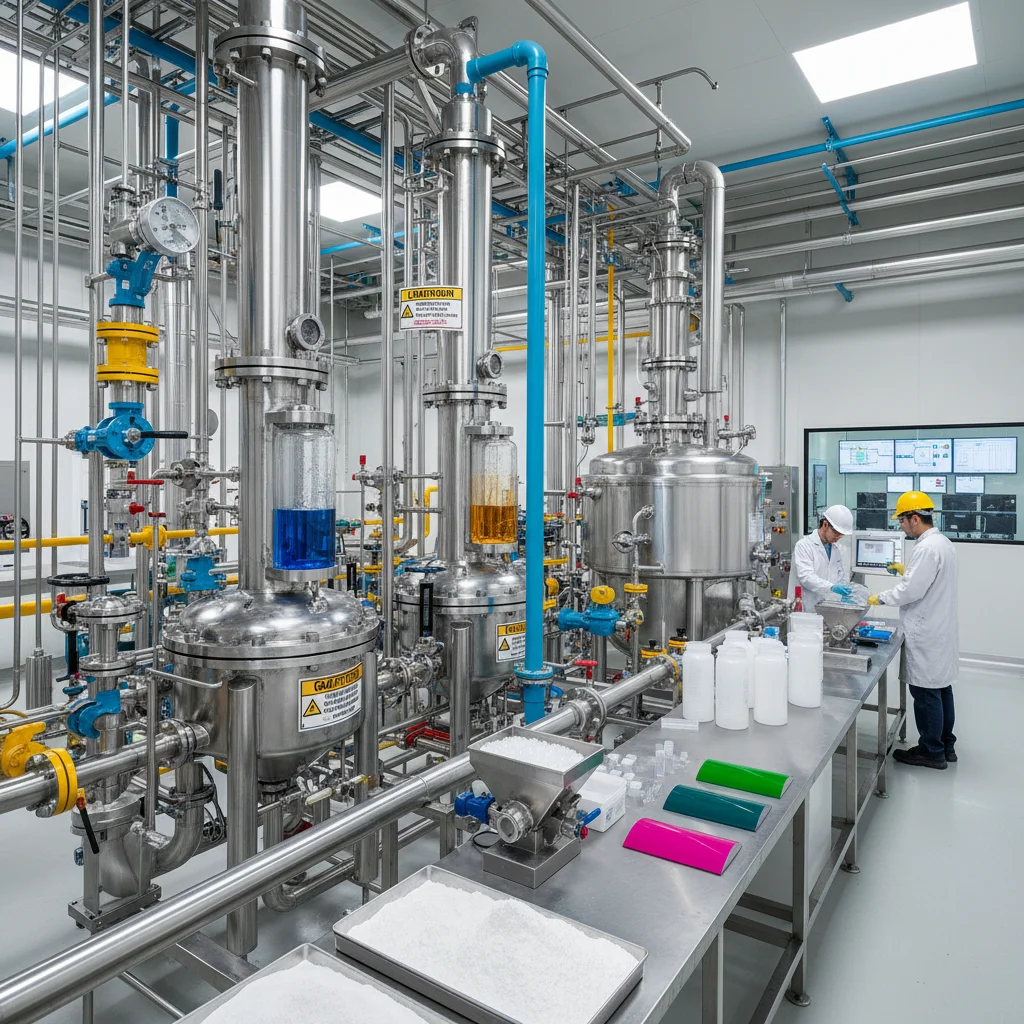
A professional chemical product supplier serves as the critical link between complex raw material synthesis and the final industrial application. In the context of specialty surfactants like Lauryl Betaine, such a supplier does not merely provide a substance but delivers a calibrated chemical solution that ensures stability, safety, and high performance across various personal care and industrial formulations.
Many manufacturers struggle with inconsistent foaming properties, pH instability, or excessive skin irritation in their final products. These challenges often stem from low-purity raw materials or an inability to source surfactants that maintain efficacy in hard water conditions. Selecting a partner with deep technical expertise in amphoteric surfactants is essential to overcoming these formulation hurdles.
This guide explores the technical advantages of Lauryl Betaine, its diverse application spectrum, and the critical criteria for evaluating a chemical product supplier. By understanding the interplay between chemical properties and industrial needs, procurement teams can optimize their supply chain for both quality and cost-efficiency.

1Understanding Lauryl Betaine Properties

Lauryl Betaine is a high-performance amphoteric surfactant, meaning it possesses both positive and negative charges within the same molecule. This unique chemical structure allows it to remain stable across a wide pH range and provides exceptional compatibility with other surfactant classes, including anionic, cationic, and non-ionic varieties.
From a chemical standpoint, its ability to maintain surface activity even in the presence of hard water salts makes it indispensable for detergents and cleansers. It acts as a foam booster and a conditioning agent, enhancing the tactile experience of the product while maintaining cleaning efficiency.
Working with a reliable chemical product supplier ensures that the Lauryl Betaine provided meets strict purity standards, reducing the risk of unwanted discoloration or odor in the final consumer product.
2Core Technical Advantages and Features
The primary value of Lauryl Betaine lies in its multifaceted performance. It generates an abundant, stable foam that is highly prized in shampoo and body wash formulations. Beyond aesthetics, it provides a conditioning effect that leaves surfaces or hair feeling smooth and manageable.
Another critical advantage is its antimicrobial activity. Research indicates it can inhibit various bacterial strains, including Mycobacterium tuberculosis, making it a valuable additive in specialized industrial cleansing agents that require a baseline of bactericidal activity.
Furthermore, its role as an antistatic agent and fiber softener extends its utility into the textile industry, where it helps in processing fibers to reduce static cling and improve the overall texture of the fabric.
3Industrial Application Scenarios
In the personal care sector, Lauryl Betaine is widely used in baby care products and facial cleansers. Because it significantly lowers the irritation potential of harsh surfactants, it allows brands to create products that are effective yet gentle enough for sensitive skin.
In industrial settings, the surfactant is deployed in heavy-duty cleaners and degreasing formulations. Its resistance to hard water ensures that cleaning agents remain active even in regions with high mineral content in the water supply, ensuring consistent performance.
The textile industry utilizes this chemical for fiber softening and anti-static treatments. By modifying the surface charge of the fibers, it prevents the buildup of static electricity during high-speed industrial weaving and knitting processes.
4Performance Metrics and Stability Analysis
Analyzing the performance of Lauryl Betaine involves measuring its critical micelle concentration (CMC) and its foaming height under various temperature and pH conditions. Compared to standard anionic surfactants, amphoteric options show a much flatter performance curve across pH 4 to 9.
Stability in hard water is another key metric. While traditional soaps precipitate in the presence of calcium and magnesium ions, Lauryl Betaine remains soluble and active, ensuring that the cleaning power does not drop in non-distilled water environments.
chemical product supplier Performance Metrics
The data suggests that when sourced from a high-quality chemical product supplier, the consistency of these metrics is significantly higher, leading to fewer batch failures during the production of large-scale cosmetic or industrial lots.
5Procurement and Selection Criteria
When selecting a chemical product supplier, procurement managers must look beyond the price per kilogram. The total cost of ownership includes the purity of the material, the reliability of the delivery schedule, and the availability of technical documentation like the TDS (Technical Data Sheet) and SDS (Safety Data Sheet).
Customization capabilities are also vital. A top-tier supplier can provide bulk packaging options and customized specifications to match the specific viscosity or concentration requirements of a unique formulation, reducing the need for further processing at the factory.
Payment flexibility, such as T/T, L/C, or Sinosure Credit, can also be a deciding factor for international buyers looking to manage cash flow while maintaining a steady stream of high-quality raw materials.
6Market Trends in Specialty Surfactants
The market is currently shifting toward "green chemistry." There is an increasing demand for surfactants that are not only biodegradable but also derived from sustainable feedstock. Lauryl Betaine, often derived from coconut oil, fits well into this sustainability trend.
Another trend is the integration of multi-functional chemicals. Instead of using three different additives for foaming, conditioning, and antimicrobial properties, formulators are increasingly relying on a single high-performance amphoteric surfactant to achieve all three goals.
Technological advancements in production lines—such as improved drying and filling machinery—are allowing suppliers to provide higher purity levels with lower moisture content, further improving the shelf life of the raw materials.
7Comparison of Surfactant Types
Choosing the right surfactant depends entirely on the desired outcome. While anionic surfactants provide the strongest cleaning power, they can be harsh. Cationic surfactants are great for conditioning but often incompatible with anionics. Amphoterics like Lauryl Betaine bridge this gap.
The following table compares Lauryl Betaine against other common surfactant types to help procurement teams determine the best fit for their specific application.
| Surfactant Type | Skin Mildness | Hard Water Stability | Primary Use Case |
|---|---|---|---|
| Anionic (SLS) | Low | Medium | Heavy Degreasing |
| Cationic | Medium | High | Hair Conditioners |
| Non-ionic | High | High | Emulsifiers |
| Amphoteric (Betaine) | Very High | Very High | Baby Care/Mild Cleansers |
| Natural Saponins | Extreme | Low | Organic Cosmetics |
| Synthetic Blends | Variable | High | Industrial Detergents |
In conclusion, for formulations where mildness and compatibility are non-negotiable, Lauryl Betaine remains the gold standard. A professional chemical product supplier can provide the necessary samples and technical support to validate these comparisons in your specific lab environment.
Frequently Asked Questions
Conclusion
Selecting a high-quality Lauryl Betaine from a trusted chemical product supplier is a strategic decision that impacts product safety, user experience, and manufacturing efficiency. Its unique ability to combine mildness with high performance across diverse pH and water conditions makes it an essential tool for modern chemists in both the cosmetic and industrial sectors.
For procurement teams and formulators looking to enhance their product lines with stable, high-purity surfactants, reviewing technical specifications and requesting samples is the best first step. Detailed product information and professional support can be found at www.hbjrain.com.