Industrial Applications and Technical Guide for Barium Carbonate
Barium Carbonate: An Essential Guide for Industrial Applications
In the diverse world of chemical manufacturing, barium carbonate serves as a critical inorganic compound used across various high-tech industries. Known for its stability and specific chemical properties, this white powder is indispensable in the production of specialty glass, ceramics, and magnetic materials. Understanding its purity levels and chemical behavior is essential for manufacturers aiming to optimize their production yield and product quality. This guide provides a professional analysis of its properties, industrial uses, and technical specifications to help procurement managers and engineers make informed decisions.

Chemical Properties and Stability of Barium Carbonate
The chemical formula BaCO₃ defines a compound that is highly valued for its insolubility in water and its ability to react with acids. High-purity barium carbonate acts as a reliable source of barium ions in various synthesis processes. Its thermal stability allows it to withstand high temperatures before decomposing into barium oxide and carbon dioxide, a property that is particularly useful in the ceramics industry. By maintaining a consistent particle size distribution, manufacturers can ensure that the chemical integrates seamlessly into complex mixtures without causing structural anomalies in the final product.
Technical Note: Pure barium carbonate appears as a white, odorless powder. Its quality is typically measured by its purity percentage (usually 99% or higher for industrial grades) and the presence of trace impurities like iron or sulfur.
Primary Industrial Applications of Barium Carbonate
The utility of barium carbonate spans several critical sectors. In the glass industry, it is used to increase the refractive index and luster of optical glass and crystals. In ceramics, it acts as a flux, reducing the melting temperature of glazes and preventing the leaching of soluble salts. Furthermore, it is a key raw material in the production of barium ferrites, which are essential for permanent magnets used in electronics. Its ability to neutralize acids also makes it a useful additive in certain specialized water treatment and chemical processing environments.
Key Industry Roles:
• Optical Glass: Enhances clarity and light-bending properties.
• Ceramic Glazes: Improves surface durability and finish.
• Electronics: Crucial for high-performance magnetic components.
• Brick Manufacturing: Prevents efflorescence on surface walls.
Comparing Barium Carbonate Grades and Purity
Not all forms of barium carbonate are created equal. Depending on the end-use, industries may require different purity levels. For instance, while the brick industry can utilize technical grade material, the electronics and optical glass sectors require ultra-pure grades to avoid contamination that could affect conductivity or transparency. The table below illustrates the typical differences between standard and high-purity specifications.
Safe Handling and Storage of Barium Carbonate
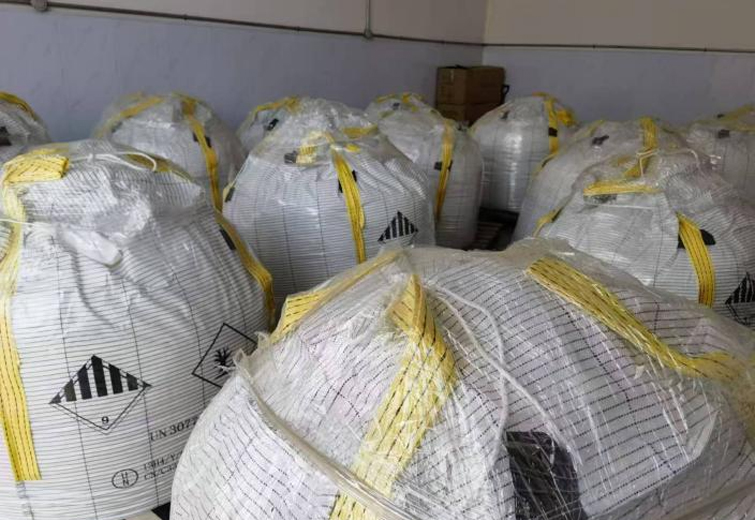
Due to the nature of barium compounds, strict adherence to safety protocols is required when managing barium carbonate in a manufacturing setting. Proper ventilation and the use of Personal Protective Equipment (PPE), such as dust masks and gloves, are essential to prevent inhalation and skin contact. Storage should be in a cool, dry environment, ensuring that the containers are tightly sealed to avoid moisture absorption. Proper labeling and adherence to MSDS guidelines ensure that the workforce remains safe while maintaining the integrity of the chemical raw material.

Technical Specifications for Bulk Procurement
When sourcing barium carbonate for large-scale production, technical specifications are the primary metric for quality control. Procurement teams must verify the particle size and the solubility profile to ensure compatibility with existing production lines. Standard packaging typically includes 25kg bags or bulk drums to minimize waste and facilitate transport. Below is a detailed specification table commonly used for quality verification during the receiving process.
Conclusion: Choosing a Reliable Barium Carbonate Partner
The selection of a high-quality barium carbonate supplier is a strategic decision that directly impacts the quality of the final industrial product. Whether it is for enhancing the brilliance of optical glass or stabilizing ceramic glazes, purity and consistency are non-negotiable. By focusing on detailed technical specifications and safety standards, manufacturers can ensure seamless integration into their production workflows. For those seeking a professional and consistent supply of chemical raw materials, partnering with an experienced manufacturer is the most effective way to guarantee long-term operational success.
Frequently Asked Questions (FAQs)
How is barium carbonate used to prevent efflorescence in bricks?
Efflorescence occurs when soluble salts migrate to the surface of a brick and crystallize, leaving white powdery deposits. Barium carbonate is added to the clay mix because it reacts with soluble sulfates (like calcium or magnesium sulfate) to form barium sulfate, which is highly insoluble. This prevents the salts from migrating to the surface, ensuring the bricks maintain a clean, professional appearance and improved structural longevity.
What is the difference between barium carbonate and barium oxide?
Barium carbonate (BaCO₃) is a salt that is stable at room temperature and easier to handle, store, and transport. Barium oxide (BaO), on the other hand, is a strong base and is much more reactive, often produced by heating barium carbonate to high temperatures (calcination). In most industrial applications, the carbonate form is preferred as the starting raw material because of its stability and ease of dosing in chemical reactions before it is converted into other barium compounds during firing or smelting.
Can the particle size of barium carbonate be customized for specific needs?
Yes, the particle size of barium carbonate can be customized through milling and classification processes. Fine powders (micronized) are typically required for high-end ceramic glazes and optical glass to ensure complete dissolution and homogeneity. Coarser grades may be used in construction or large-scale industrial chemical synthesis. Most professional suppliers provide different mesh sizes to meet the specific viscosity and reaction rate requirements of the customer's production line.
What are the main safety precautions when storing bulk quantities?
When storing bulk barium carbonate, it is crucial to keep the material in a well-ventilated area away from strong acids, as they can cause a chemical reaction releasing carbon dioxide gas. Bags should be stored on pallets to prevent contact with damp floors, which could lead to clumping. Employees should be trained on the use of dust extraction systems during unloading to minimize airborne particles, and emergency eyewash stations should be available in the storage vicinity as a standard safety precaution.