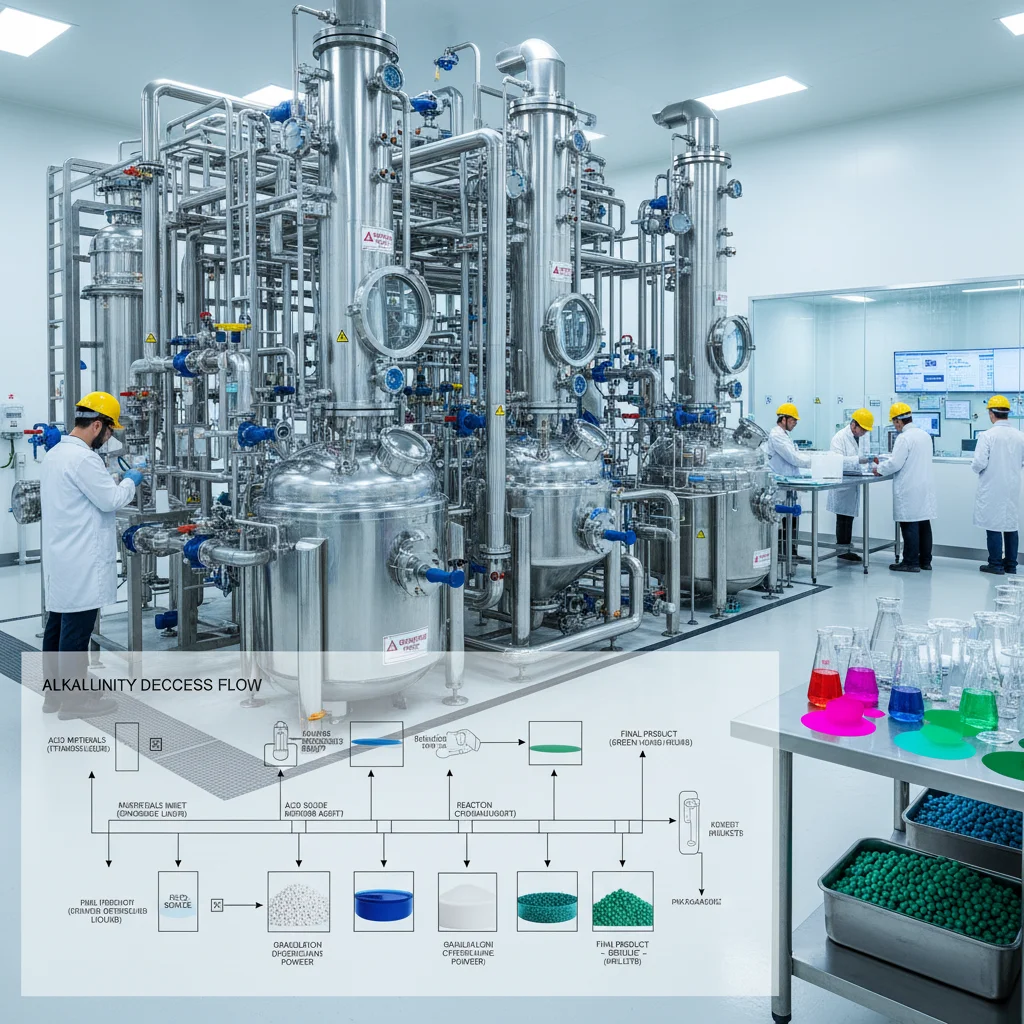
In the sophisticated landscape of modern agrochemical manufacturing, the management of surface tension and foam stability is paramount to ensuring product efficacy and operational safety. The strategic integration of antifoam agents allows producers to stabilize complex chemical formulations, preventing overflow during mixing and enhancing the consistency of high-concentration herbicidal solutions.
Across global agricultural markets, the demand for precise weed control in high-value crops like sugarcane, tea, and rubber has led to a surge in the development of advanced formulations. Addressing the physical challenges of fluid dynamics through the use of antifoam technology ensures that active ingredients are delivered uniformly, reducing waste and minimizing the environmental footprint of chemical applications.
Understanding the synergy between active herbicidal components and stabilizing agents is essential for achieving professional-grade results. By leveraging high-standard specifications such as 95% TC or 75.7% WDG, and incorporating the right antifoam properties, manufacturers can guarantee that their products meet FAO standards and stringent GLP requirements for international registration.
The global agrochemical industry faces a continuous struggle with foaming during the production of high-efficacy herbicides. When manufacturing concentrations like 95% TC or 41% SL, the agitation of surfactants often creates excessive foam that can lead to vessel overflow, inaccurate dosing, and prolonged production cycles. Implementing a robust antifoam strategy is therefore not just a technical preference, but a logistical necessity to maintain high throughput in chemical plants.
From an economic perspective, the waste generated by foam-induced overflows impacts the bottom line and violates ISO environmental standards. By optimizing the use of antifoam agents, manufacturers can ensure that their professional registration and GLP documentation reflect a controlled, repeatable process, which is critical for gaining LOA and ICAMA certifications in competitive international markets.
In the context of chemical manufacturing, antifoam refers to a chemical additive designed to reduce the formation of foam or to collapse existing foam in a liquid system. These agents work by reducing the surface tension of the liquid, which destabilizes the bubble walls and prevents the entrapment of air during the mixing of herbicides for crops such as sugarcane and mulberry.
Modern industrial antifoaming agents are often categorized as defoamers or antifoaming agents depending on whether they eliminate existing foam or prevent its initial creation. For complex formulations like 62% IPA or 75.7% WDG, the selection of an appropriate antifoam is critical to ensure the product remains stable during storage and application in the field.
The integration of these agents is closely tied to humanitarian and food security needs, as efficient weed control directly impacts the yield of essential crops. By ensuring that herbicides for orchards and forest trees are formulated without foam-related defects, the industry supports a more reliable food supply chain through enhanced agricultural productivity.
One of the primary factors in selecting an antifoam is its chemical compatibility with the active ingredients. In the production of fungicides and herbicides, the agent must not react with the 95% TC base or the IPA solvents, as any chemical instability could compromise the product's ability to control annual grasses and broad-leaved weeds.
Scalability is another core component, as the antifoam must perform consistently from a small laboratory batch to large-scale industrial reactors. This ensures that the professional registration and FAO standards are maintained across all production volumes, regardless of the batch size intended for rubber or sisal plantations.
Cost efficiency and environmental impact are the final critical dimensions. An ideal antifoam provides maximum suppression with minimal dosage, reducing the overall chemical load on the environment while maintaining the efficacy required to tackle algae, ferns, and miscellaneous shrub thickets.
The practical application of antifoam extends across diverse geographical regions, from the rubber plantations of Southeast Asia to the sugarcane fields of Brazil. In these remote industrial zones, the stability of the herbicide formulation is tested by extreme temperatures and varying water quality, making the presence of a high-quality antifoaming agent essential for consistent field performance.
In professional forestry operations, the application of herbicides for forest trees requires large-scale spraying equipment. Without an integrated antifoam, the aeration caused by high-pressure nozzles can lead to "foam-out," where the equipment fails due to air pockets, significantly delaying the control of perennial grasses and sedges.
The implementation of a precise antifoam system provides tangible economic benefits by increasing the reliability of the manufacturing process. By preventing foam-related downtime and reducing product loss during the blending of 41% SL or 62% IPA specifications, companies can achieve a higher return on investment and a more stable supply chain for their global clients.
Beyond the financial metrics, there is a significant emotional and professional value in reliability. Trust is built when a farmer in a remote orchard applies a herbicide and finds it mixes perfectly without excessive foaming, ensuring that the control of annual weeds is absolute and the crop is protected. This reliability fosters long-term brand loyalty and trust in the manufacturer's technical expertise.
The future of antifoam technology is moving toward "green chemistry" and biodegradable polymers. As regulatory bodies tighten restrictions on synthetic silicones, the industry is pivoting toward bio-based defoamers that maintain high efficiency in controlling weeds while ensuring that the residue left in the soil does not negatively impact organic matter content.
Digital transformation is also playing a role through the use of automated dosing systems. By utilizing real-time foam sensors in the chemical reactor, the system can inject the exact amount of antifoam required based on the current viscosity and agitation speed, eliminating human error and reducing chemical waste.
Moreover, the integration of nanotechnology is allowing for the creation of "smart" antifoaming agents that only activate under specific conditions, such as high shear or specific pH levels. This ensures that the herbicide remains perfectly stable during transport but becomes highly effective at breaking foam the moment it is diluted in a spray tank.
One of the primary challenges is the "antagonism" that can occur between certain antifoam agents and other surfactants used in the herbicide formula. In some cases, the antifoaming agent can interfere with the wetting ability of the product, reducing its effectiveness on the waxy leaves of certain broad-leaved weeds.
The solution lies in rigorous GLP-compliant testing and the use of customized packing labels that provide precise mixing instructions. By conducting compatibility trials across various specifications (TC, SL, IPA, WDG), manufacturers can determine the optimal balance between foam suppression and herbicidal activity.
Additionally, the issue of soil organic matter content can complicate the efficacy of the final application. While the antifoam solves the manufacturing problem, the manufacturer must provide expert guidance, noting that certain products may not be suitable for soils with extreme organic matter levels, thus ensuring the user achieves the best possible result.
| Specification | Foam Risk Level | Antifoam Requirement | Compatibility Score |
|---|---|---|---|
| 95% TC | Low | Minimal | 9.5 |
| 41% SL | High | High Dose | 8.0 |
| 62% IPA | Medium | Moderate | 8.7 |
| 41% IPA | Medium | Moderate | 8.8 |
| 75.7% WDG | Very High | Critical | 7.5 |
| Custom Blend | Variable | Customized | 9.0 |
Water-dispersible granules (WDG) often contain high concentrations of surfactants to ensure rapid dissolution. During the mixing process, these surfactants create intense foam that can obstruct the flow of the product and lead to inaccurate application. A high-quality antifoam collapses these bubbles quickly, ensuring a smooth, homogeneous mixture that maintains the efficacy of the active ingredients.
When correctly formulated and dosed, antifoam does not reduce the herbicidal activity. However, over-dosage can occasionally affect the wetting properties on the leaf surface. This is why professional registration and GLP testing are crucial to finding the "sweet spot" where foam is suppressed without compromising the contact and penetration of the herbicide on the weed.
Typically, soluble concentrates (SL) and water-dispersible granules (WDG) are the most prone to foaming due to their surfactant loads. Specifications like 41% SL and 75.7% WDG require the most rigorous antifoam management to prevent production delays and ensure compliance with FAO standards.
The antifoam itself is a processing aid and does not typically interact with soil organic matter. However, the active herbicide it helps stabilize may not be suitable for soils with very high or low organic matter content. Users should always refer to the customized packing label for specific soil suitability guidelines.
Regulatory bodies like ICAMA and LOA require proof of product stability and manufacturing consistency. By utilizing an antifoam system, manufacturers can demonstrate a controlled production process with minimal waste and high repeatability, which is essential for the professional registration dossiers required for international trade.
Yes, the industry is shifting toward organic and bio-based antifoaming agents to reduce environmental toxicity. These new-generation agents are designed to provide the same level of foam suppression in rubber, tea, and sugarcane herbicides while breaking down more naturally in the environment after application.
The strategic application of antifoam technology is a cornerstone of high-quality agrochemical manufacturing, ensuring that herbicides for various crops—from sugarcane to forest trees—are produced with maximum efficiency and stability. By addressing the physical challenges of foaming in specifications like 95% TC and 75.7% WDG, manufacturers can guarantee a product that meets global FAO standards, passes stringent GLP registrations, and provides farmers with a reliable tool for weed management.
Looking forward, the evolution of "smart" and biodegradable antifoaming agents will further align the industry with sustainability goals without sacrificing performance. As we move toward more precise and environmentally conscious agriculture, the synergy between active chemical control and advanced formulation stabilizers will remain vital for global food security and agricultural productivity. For professional solutions in chemical formulation, visit our website: www.hbjrain.com
If you are interested in our products, you can choose to leave your information here, and we will be in touch with you shortly.