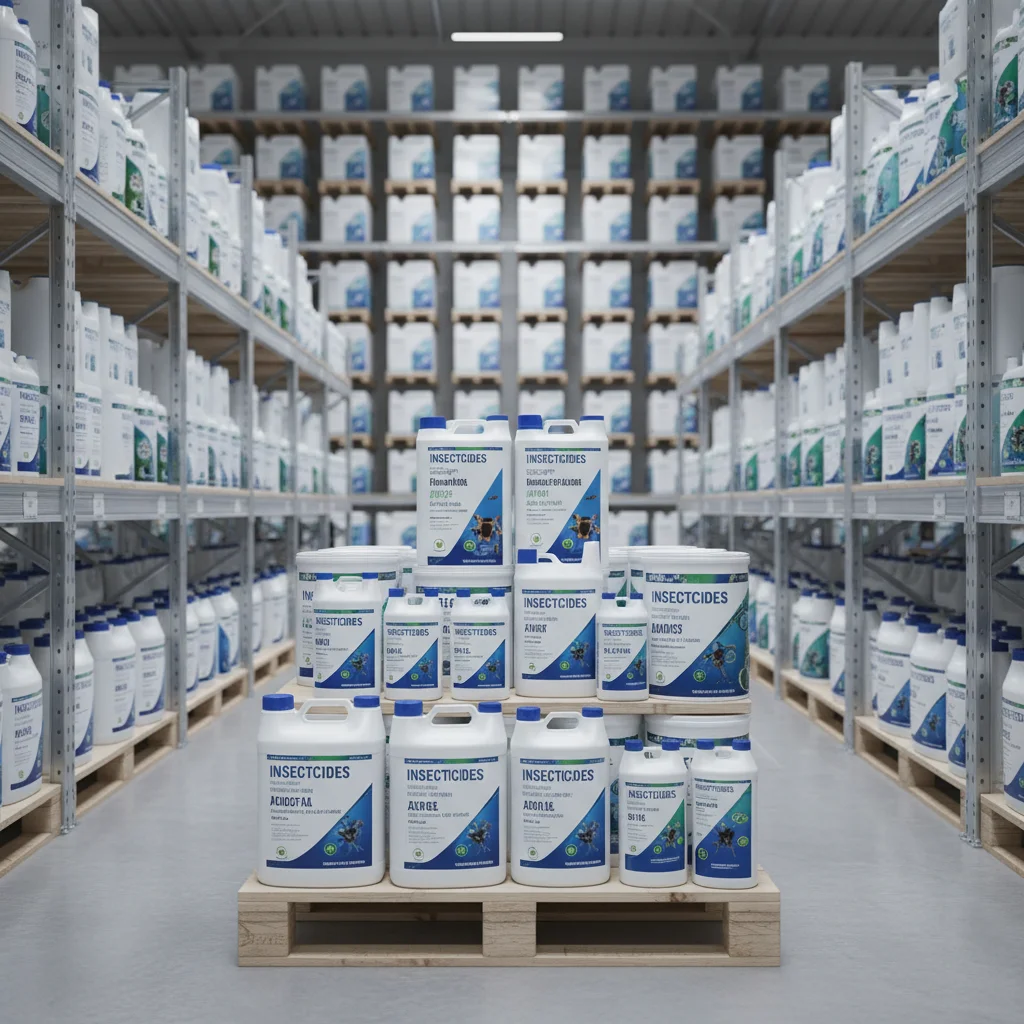
The global agricultural landscape is currently facing unprecedented pressure to increase crop yields while managing evolving pest and weed resistances. In this high-stakes environment, securing a reliable supply chain through herbicides wholesale becomes essential for large-scale farming operations and distributors who require consistent product quality and competitive pricing to maintain food security.
Efficient procurement strategies in the chemical industry allow producers to access advanced formulations that protect crops from invasive species without compromising the economic viability of the farm. By leveraging wholesale channels, stakeholders can ensure that the latest chemical innovations are distributed rapidly across various geographic regions, reducing the time between laboratory development and field application.
Understanding the nuances of herbicides wholesale is not just about cost reduction; it is about integrating systemic plant protection into a broader sustainable farming strategy. This approach ensures that growers have the necessary tools to combat crop loss while adhering to international safety and environmental standards.
The global demand for agricultural chemicals is driven by the necessity to feed a growing population. As a result, the market for herbicides wholesale has expanded, shifting from simple local distribution to complex international trade networks that emphasize purity, stability, and efficacy.
These dynamics are heavily influenced by ISO standards and the need for GLP (Good Laboratory Practice) certified products. By standardizing the wholesale process, manufacturers can guarantee that a product like Chlorfenapyr maintains its potency regardless of the destination country, ensuring predictable results for the end-user.
At its core, the wholesale chemical supply chain refers to the bulk distribution of agricultural agents from the manufacturer to large-scale distributors or directly to industrial farming cooperatives. This system eliminates unnecessary intermediaries, allowing for more direct communication regarding product specifications and application guidelines.
This model is particularly critical for the distribution of specialized agents. When dealing with high-volume shipments, the focus shifts toward logistics efficiency, packaging integrity (such as standard 25kg bags), and the provision of professional registration documents like ICAMA or LOA to facilitate smooth customs clearance.
Modern wholesale operations are no longer just about moving product; they are about providing a comprehensive technical package. This includes providing detailed method-of-application guides and safety precautions to ensure the chemical is used responsibly across diverse climatic zones.
The efficacy of any program relying on herbicides wholesale depends on the precision of the active ingredient and the stability of the suspension agent. For instance, high-grade formulations allow for flexible application rates, ranging from 30 ml to 50 ml per acre depending on insect population density.
A critical component of successful herbicides wholesale is the ability to provide customized packing labels and FAO standard packaging. This ensures that the user has immediate access to vital safety information, such as the toxicity of the product to fish and the necessary safe intervals for specific vegetable crops.
Furthermore, the technical support accompanying the wholesale shipment is paramount. Providing clear instructions on the timing of sprays—such as applying twice per crop with a 10-day interval—prevents the development of drug resistance and maximizes the return on investment for the grower.
The practical application of these chemicals requires a strict adherence to dosage based on the life cycle of the target pest. For young larval stages or low-density populations, a concentration of 30 ml of suspension agent or nitrile concentrate per acre is typically sufficient to achieve control.
However, when the insect age is higher or population density increases, the dosage must be scaled up to 40-50 ml per acre. This scalability is a key reason why professional herbicides wholesale providers offer concentrated formulations that can be easily diluted with water for spray application.
One of the primary advantages of opting for herbicides wholesale is the significant reduction in unit costs, which allows agricultural enterprises to allocate budgets toward other critical areas like irrigation or seed quality. Bulk purchasing also minimizes the risk of supply chain disruptions during peak spraying seasons.
Beyond the financial aspect, bulk procurement ensures consistency in the chemical batch. When a farm uses the same formulation from a single wholesale shipment for an entire season, it simplifies the monitoring of crop reactions and makes it easier to adjust application timing based on the 10-day interval rule.
The future of the agricultural chemical industry is moving toward "smarter" formulations that reduce environmental runoff while maintaining high potency. Innovations in suspension agents are allowing for even more precise delivery systems, reducing the total volume of chemicals required per acre.
Digital transformation is also playing a role, with wholesale providers integrating QR codes on packaging to provide real-time application guides and safety warnings. This helps users avoid common mistakes, such as applying the product to cucumber or tobacco crops without the necessary caution.
Sustainability is becoming a core driver, leading to the development of biodegradable surfactants. These innovations ensure that while the herbicides wholesale market continues to grow, it does so in a way that protects groundwater and non-target aquatic species.
Compliance is the cornerstone of the international chemical trade. Every shipment in the herbicides wholesale sector must be accompanied by professional registration documents, including GLP and ICAMA certifications, to ensure the product meets the stringent health and safety laws of the importing country.
Safety precautions are not optional; they are integrated into the product's value proposition. For example, setting a 14-day safe interval for cruciferous vegetables is a mandatory safety measure to ensure that residues are depleted before the crop reaches the consumer.
Environmental stewardship is equally critical. Because many potent agricultural agents are toxic to fish, wholesale providers must emphasize that liquid should never be sprinkled directly into water sources. This commitment to safety ensures the long-term viability of the industry and the health of the ecosystem.
| Compliance Metric | Standard Requirement | Risk Level | Mitigation Strategy |
|---|---|---|---|
| Registration Docs | GLP/ICAMA/LOA | High | Professional Certification |
| Packaging | FAO Standard | Medium | Customized Labels |
| Safe Interval | 14 Days (Cruciferous) | High | Strict Harvest Timing |
| Aquatic Safety | Zero Direct Water Entry | Critical | Buffer Zone Application |
| Drug Resistance | Max 2 Applications/Crop | Medium | Rotation Strategy |
| Dosage Control | 30-50 ml / Acre | Low | Population Density Audit |
For most crops, the dosage depends on insect population density. When populations are low or larvae are in the young stage, 30 ml of suspension agent per acre is recommended. For higher densities or older insects, this should be increased to 40-50 ml per acre, diluted with water and sprayed up to two times per crop, spaced 10 days apart.
Yes, specific caution is required for cucumber, lettuce, tobacco, and melon vegetables. Additionally, for cruciferous vegetables, a safe interval of 14 days must be observed between the final application and harvest to ensure consumer safety and residue compliance.
To avoid drug resistance, it is strictly recommended to limit application to only two times per crop. Following the recommended 10-day interval between sprays and rotating with different active ingredients as part of an Integrated Pest Management (IPM) strategy is the most effective way to maintain product efficacy.
These products are toxic to fish. It is absolutely forbidden to sprinkle the liquid directly into water bodies or water sources. Wholesale providers ensure that packaging is FAO standard and labels clearly warn against aquatic contamination to prevent ecological damage.
Professional shipments typically include GLP (Good Laboratory Practice) reports, ICAMA registration, and LOA (Letter of Authorization). These documents are essential for legal importation and prove that the product meets international quality and safety standards.
Yes, most professional wholesale providers offer customized packing labels and flexible packaging sizes. While the standard is 25kg per bag, options can be adjusted according to the customer's specific request to meet local branding or regulatory requirements.
In summary, the success of modern agricultural protection relies on the strategic integration of herbicides wholesale into farming operations. By balancing bulk procurement efficiencies with strict adherence to dosage metrics—such as the 30-50 ml per acre range—and regulatory safety intervals, growers can protect their yields while maintaining environmental integrity and consumer safety.
Looking forward, the industry must continue to evolve toward sustainable formulations and digital traceability. For distributors and farmers alike, partnering with a provider that offers professional GLP and ICAMA registrations is the only way to ensure long-term reliability in an increasingly regulated global market. Visit our website: www.hbjrain.com
If you are interested in our products, you can choose to leave your information here, and we will be in touch with you shortly.