Exploring Styrene Butadiene Rubber Properties Applications and Manufacturing Processes
Styrene Butadiene Rubber (SBR): A Comprehensive Overview
Styrene butadiene rubber (SBR) is a synthetic rubber copolymer derived from styrene and butadiene. It is one of the most widely used rubbers globally, valued for its versatile properties and cost-effectiveness. From tire manufacturing to shoe soles and beyond, SBR's applications are extensive. This article provides a detailed look at its properties, manufacturing processes, applications, and market trends. Understanding SBR is crucial for businesses involved in rubber product development and sourcing.
Understanding the Properties of Styrene Butadiene Rubber
SBR offers a unique combination of properties. It exhibits excellent abrasion resistance, making it ideal for applications subject to wear and tear. Its good tensile strength provides durability and resistance to deformation. Furthermore, SBR has good resilience, meaning it can recover its shape after being stretched or compressed. However, it generally has lower resistance to oils, ozone, and weathering compared to some other synthetic rubbers. The properties of SBR can be tailored by adjusting the styrene-butadiene ratio and employing different polymerization methods. This customization allows for creating SBR grades suited to a wide range of specific needs.
Key Highlights: Excellent abrasion resistance, good tensile strength, and adaptable properties through ratio adjustments.
SBR Manufacturing Processes: Emulsion vs. Solution Polymerization
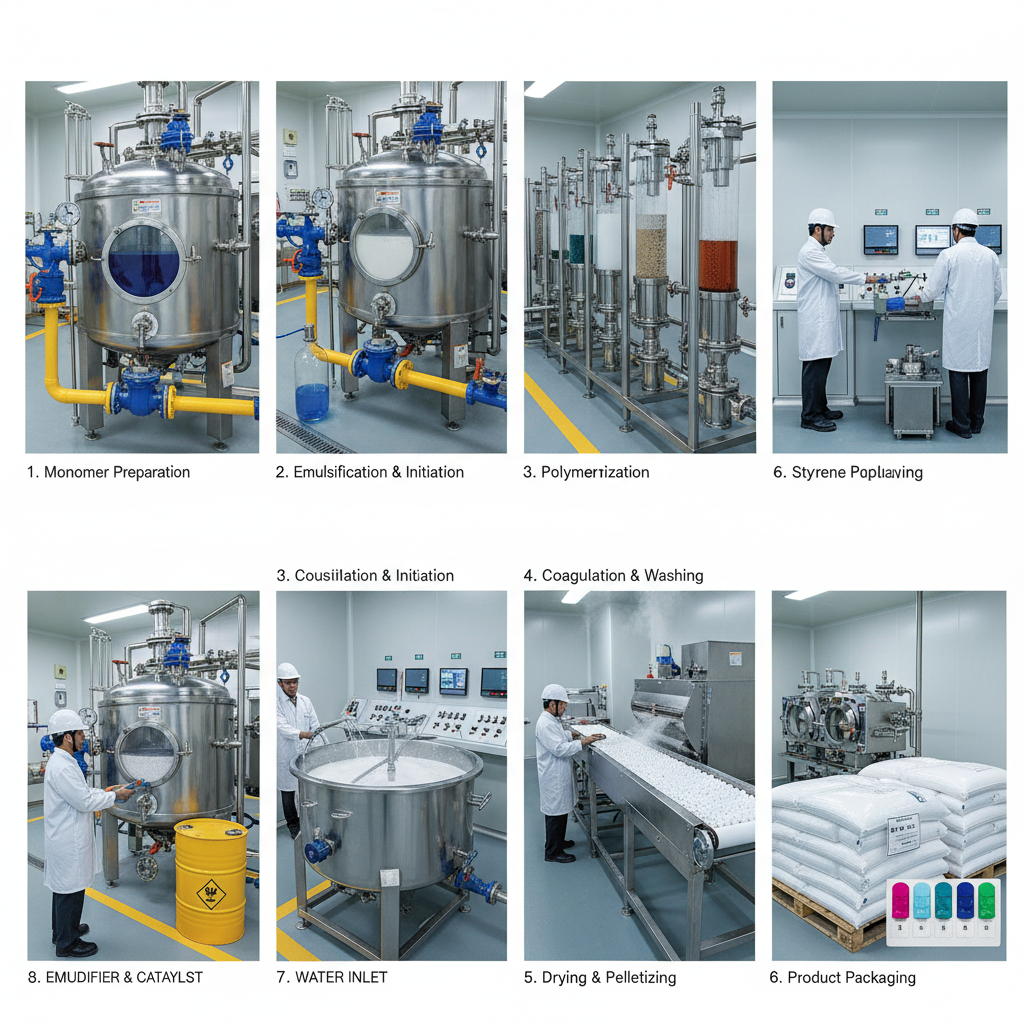
There are two primary methods for producing SBR: emulsion polymerization and solution polymerization. Emulsion SBR (E-SBR) is the more common method, offering lower production costs. It involves polymerizing styrene and butadiene in an emulsion of water, using soaps or detergents as emulsifiers. Solution SBR (S-SBR), on the other hand, utilizes organic solvents and typically results in a rubber with improved properties, such as lower hysteresis (reduced rolling resistance) and better wet grip, making it preferred for high-performance tires. Each process yields SBR with distinct characteristics suited to different applications.
Emulsion vs. Solution SBR:
• Emulsion (E-SBR): Lower cost, widely available.
• Solution (S-SBR): Improved properties, higher performance.
• S-SBR is favored for tire treads.
Key Applications of Styrene Butadiene Rubber
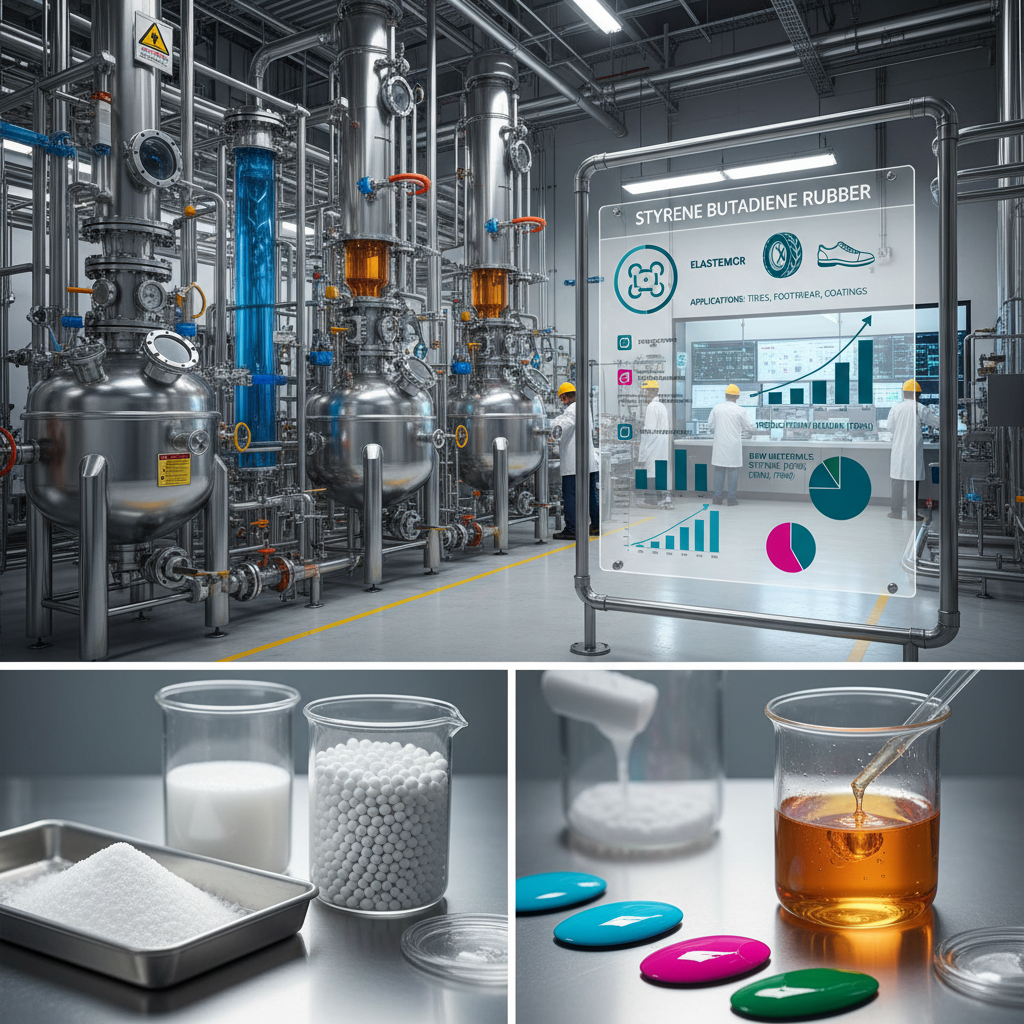
The applications of SBR are incredibly diverse. The largest single consumer of SBR is the tire industry, where it is used extensively in tire treads and sidewalls. Other significant applications include shoe soles, conveyor belts, gaskets, adhesives, and molded rubber goods. It's also used in modified asphalt for road construction, enhancing the road's durability and resistance to cracking. In addition, SBR finds use in various industrial and consumer products, highlighting its versatility and widespread utility.
Global Market Trends for Styrene Butadiene Rubber
The global SBR market is influenced by the growth in the automotive industry, particularly tire production. Demand is also increasing from the construction and footwear sectors. Asia-Pacific is currently the largest consumer of SBR, driven by rapid industrialization and economic growth in countries like China and India. Increasing demand for high-performance tires, fueled by the growing automotive industry and a focus on fuel efficiency, is boosting the demand for S-SBR. Sustainability concerns are also driving research and development into bio-based SBR alternatives.
SBR Grades and Specifications
SBR is available in numerous grades, each characterized by varying styrene content, molecular weight, and oil extension. Different grades cater to specific application requirements. For instance, higher styrene content generally leads to increased hardness and tensile strength, while lower styrene content enhances flexibility and resilience. Oil-extended SBR is often used in tire applications to reduce cost and improve processing characteristics. Key specifications to consider when selecting SBR include Mooney viscosity, oil content, and styrene content. HBJRAIN offers a comprehensive range of SBR grades to meet diverse industrial needs.
Conclusion: The Continued Importance of SBR
Styrene butadiene rubber remains a crucial material in numerous industries worldwide. Its versatility, cost-effectiveness, and adaptable properties ensure its continued importance in the future. As technology advances, we can expect to see further innovations in SBR production and applications, driven by a focus on sustainability and performance. Partnering with a reliable SBR supplier like HBJRAIN is essential for businesses seeking high-quality rubber solutions.
Frequently Asked Questions (FAQs)
What are the main differences between E-SBR and S-SBR?
Emulsion SBR (E-SBR) is produced using emulsion polymerization, resulting in a lower cost material ideal for general-purpose applications like shoe soles and conveyor belts. Solution SBR (S-SBR), produced via solution polymerization, offers superior performance characteristics such as lower rolling resistance and enhanced wet grip, making it the preferred choice for high-performance tires. S-SBR generally commands a higher price due to the more complex manufacturing process and its enhanced properties. The choice between E-SBR and S-SBR depends heavily on the specific application requirements and performance criteria.
Is SBR environmentally friendly?
Traditionally, SBR is derived from petroleum-based feedstocks. However, research and development efforts are underway to produce bio-based SBR from renewable resources like plant oils. While petroleum-based SBR isn't inherently "environmentally friendly," advancements in recycling technologies are improving its sustainability. Furthermore, the durability and long lifespan of products made with SBR can reduce the overall environmental impact by minimizing the need for frequent replacements.
What factors affect the price of SBR?
Several factors influence the price of SBR, including the price of raw materials (styrene and butadiene, derived from crude oil), production costs, global supply and demand dynamics, and regional market conditions. The type of SBR (E-SBR vs. S-SBR) also significantly impacts the price, with S-SBR generally being more expensive. Geopolitical events and fluctuations in currency exchange rates can also contribute to price volatility. Partnering with a reputable supplier like HBJRAIN can help mitigate price fluctuations through strategic sourcing and long-term supply agreements.
How is SBR used in tire manufacturing?
SBR is a critical component in tire manufacturing, used in both the tread and sidewall compounds. In the tread, SBR provides excellent abrasion resistance, ensuring the tire lasts longer. Solution SBR (S-SBR) is increasingly used in high-performance tires to improve wet grip and reduce rolling resistance, leading to better fuel efficiency. In the sidewall, SBR contributes to the tire's flexibility and durability. The specific SBR grade and formulation are carefully tailored to the type of tire and its intended application, whether it's for passenger cars, trucks, or motorcycles.