The strategic application of aluminium sulphide represents a critical intersection between inorganic chemistry and modern agricultural pest management. As global food security faces increasing pressure from evolving pest populations, the demand for specialized fumigants and chemical intermediaries has surged, making the understanding of this compound essential for industrial chemists and agricultural specialists alike.
Beyond its primary chemical properties, aluminium sulphide serves as a pivotal agent in the generation of hydrogen sulphide, which is indispensable for soil sterilization and the control of subterranean pests. Its ability to release active gases under specific moisture conditions allows for a targeted approach to crop protection, reducing the need for blanket chemical applications that can harm non-target organisms.
Understanding the nuances of aluminium sulphide is not merely a technical requirement but a commercial necessity in the chemical manufacturing sector. By optimizing its purity and stability, manufacturers can provide more reliable solutions for the fungicide and herbicide markets, ensuring that plant growth regulators and pest control agents perform with maximum efficiency across diverse climatic zones.

Global Industrial Relevance of Aluminium Sulphide
On a global scale, aluminium sulphide is integrated into various supply chains, particularly where high-efficiency fumigation is required. Industry data suggests that the transition toward more controlled chemical releases has increased the reliance on aluminium-based sulphides over traditional, more volatile alternatives. This shift is driven by the need to adhere to ISO standards for chemical safety and the push for more sustainable agricultural practices.
The primary challenge addressed by this compound is the eradication of soil-borne pathogens and nematodes without leaving long-term toxic residues in the topsoil. By leveraging the specific reactivity of aluminium sulphide, operators can achieve deep-soil penetration, solving the problem of "hidden" infestations that traditional surface-level herbicides or fungicides often miss.
Chemical Definition and Industrial Meaning
In simple technical terms, aluminium sulphide is an inorganic compound characterized by its ability to react with water or moist soil to produce hydrogen sulphide gas. This reaction is the engine behind its utility as a fumigant, making it a cornerstone in the production of specialized fungicides and soil sterilization agents.
From an industrial perspective, it is more than just a reagent; it is a facilitator of crop health. In the context of modern humanitarian needs—such as increasing caloric yield per acre to feed a growing global population—the role of aluminium sulphide in preventing crop failure due to soil disease is invaluable.
Its connection to the broader chemical machine industry involves the development of precise dosing equipment that ensures the compound is distributed evenly. This synergy between the chemical product and the application machinery optimizes the efficiency of aluminium sulphide, ensuring a balance between efficacy and environmental safety.
Core Components and Stability Factors
One of the primary factors governing the efficacy of aluminium sulphide is its purity. High-grade industrial synthesis ensures that the compound remains stable during transport and storage, preventing premature degradation that could render the product useless upon application in the field.
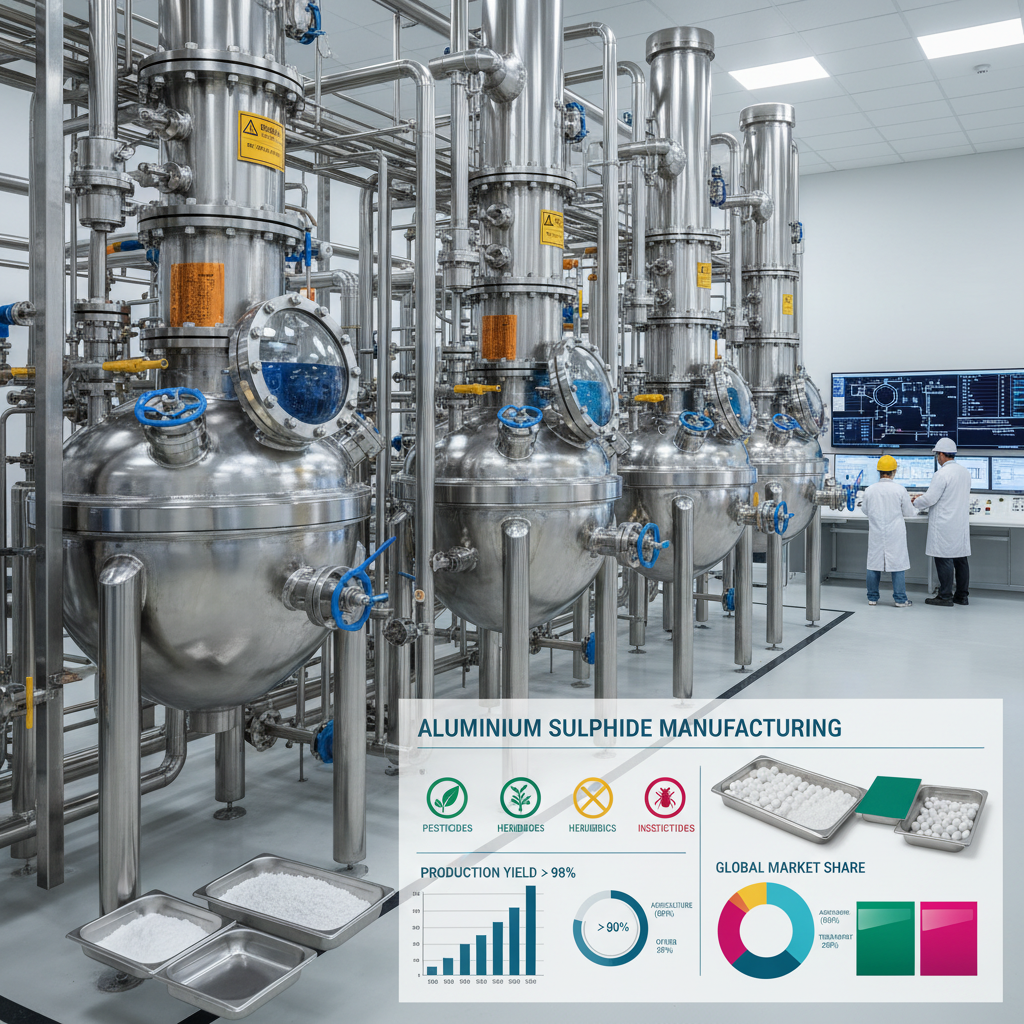
Scalability in the production of aluminium sulphide is another core component. Modern chemical plants utilize advanced reactor designs to maintain stoichiometric precision, ensuring that every batch meets the strict requirements for grain and soil treatment, thereby reducing waste and lowering costs for the end-user.
Furthermore, the cost-efficiency of this compound is realized through its high potency. Small volumes of aluminium sulphide can treat vast areas of soil, making it a logically superior choice compared to liquid-based fungicides that require repeated, high-volume applications to achieve the same level of sterilization.
Practical Performance Metrics in Agriculture
When evaluating the performance of aluminium sulphide, industry experts look at the "Gas Release Rate" and "Soil Penetration Depth." These metrics determine how quickly the active agent reaches the root zone and how long it remains active to eliminate persistent pathogens.
Comparing different formulation methods reveals that the granularity of the compound significantly impacts its dispersion. A finer mesh typically allows for faster reaction times, while coarser granules provide a sustained release, depending on the specific needs of the crop cycle.
Comparative Efficiency of Aluminium Sulphide Formulations
Global Applications and Regional Use Cases
In real-world contexts, aluminium sulphide is widely deployed in the agricultural belts of Southeast Asia and South America. In these regions, high humidity levels accelerate the hydrolysis of the compound, making it an exceptionally effective tool for treating tropical soils plagued by root-knot nematodes.
Beyond open-field farming, it is utilized in controlled-environment agriculture, such as high-tech greenhouses in Northern Europe. Here, it is applied in precise dosages to sterilize growing mediums before the planting of high-value ornamental plants, ensuring a pathogen-free start to the growth cycle.
Long-term Value and Environmental Impact
The long-term value of aluminium sulphide lies in its ability to reduce the cumulative chemical load on the environment. Unlike some systemic pesticides that persist in the soil for years, the active gas released by this compound dissipates naturally, leaving behind minimal inorganic residues that do not bioaccumulate in the food chain.
From a logical and emotional standpoint, the use of this compound provides farmers with peace of mind. Knowing that their soil is thoroughly sterilized without compromising the long-term dignity and health of the land allows for more sustainable farming legacies.
Innovation in the packaging and application of aluminium sulphide has further enhanced its safety profile. By reducing worker exposure during the loading process, the industry has transformed a potentially hazardous chemical into a manageable, high-value asset for global crop protection.
Future Innovations and Technical Challenges
Looking ahead, the integration of aluminium sulphide with digital agriculture—such as sensor-driven application systems—is a major trend. Automation allows for the "precision dosing" of the compound, where the amount of chemical is adjusted in real-time based on soil moisture levels and pest density.
Despite its benefits, challenges remain regarding the volatility of the released gases. Current research is focusing on "encapsulation technologies" that can slow the release of hydrogen sulphide, extending the window of efficacy and reducing the risk of gas leakage into the atmosphere.
Sustainability policies are also driving the development of "greener" synthesis routes for aluminium sulphide, aiming to reduce the carbon footprint of the manufacturing process while maintaining the high purity required for professional-grade fungicides and herbicides.
Technical Analysis of Aluminium Sulphide Application Variables
| Application Factor |
Effect on Efficacy |
Risk Level |
Recommended Adjustment |
| Soil Moisture |
High acceleration |
Moderate |
Reduce dosage in wet soil |
| Particle Size |
Faster release (Fine) |
Low |
Use granular for deep soil |
| Ambient Temp |
Increased volatility |
High |
Apply during cool hours |
| Soil pH |
Varies by acidity |
Low |
Test pH before application |
| Storage Time |
Gradual degradation |
Moderate |
Vacuum sealed packaging |
| Application Depth |
Higher gas retention |
Low |
Seal surface with soil |
FAQS
Aluminium sulphide primarily works by releasing hydrogen sulphide gas upon contact with moisture, which is highly effective against specific soil-borne pathogens. Unlike organic halogenated fumigants, it leaves behind inorganic residues that are generally less persistent in the environment, making it a preferred choice for sustainable soil management.
Due to the release of hydrogen sulphide gas, operators should always use appropriate respiratory protection and ensure the application area is well-ventilated or properly sealed to prevent gas escape. Using specialized chemical machinery for application minimizes direct contact and ensures safer distribution.
While highly effective, it is essential to match the dosage and timing with the specific crop's sensitivity. It is most commonly used as a pre-planting treatment. Farmers should consult specific guidelines for fungicides and herbicides to ensure the chemical does not interfere with the subsequent growth of the plants.
The compound must be stored in a cool, dry, and airtight environment. Exposure to moisture will trigger the premature release of gas, reducing its efficacy. Vacuum-sealed containers and climate-controlled warehouses are highly recommended to ensure long-term stability.
Organic certification varies by region. However, because it breaks down into naturally occurring minerals and gases rather than leaving synthetic residues, some jurisdictions view it more favorably than complex synthetic pesticides, though a professional audit is always required.
The reaction time depends heavily on soil moisture and temperature. In moist, warm soils, the gas release is almost immediate. In drier conditions, the process is slower, which can be advantageous for deep-soil penetration before the gas escapes to the surface.
Conclusion
In summary, aluminium sulphide stands as a versatile and potent tool in the arsenal of modern agricultural chemistry. By bridging the gap between raw chemical production and field application, it provides an efficient means of soil sterilization that balances high efficacy with an acceptable environmental footprint. Its role in the broader context of fungicides and herbicides ensures that farmers can protect their yields from subterranean threats while maintaining the long-term viability of their land.
As we look toward a future of precision agriculture and green chemistry, the continued optimization of aluminium sulphide will be key. By embracing automation, improved encapsulation, and sustainable manufacturing, the industry can further refine the safety and efficiency of this essential compound. For those seeking high-quality chemical solutions and professional guidance on soil treatment, we invite you to explore our comprehensive range. Visit our website: www.hbjrain.com