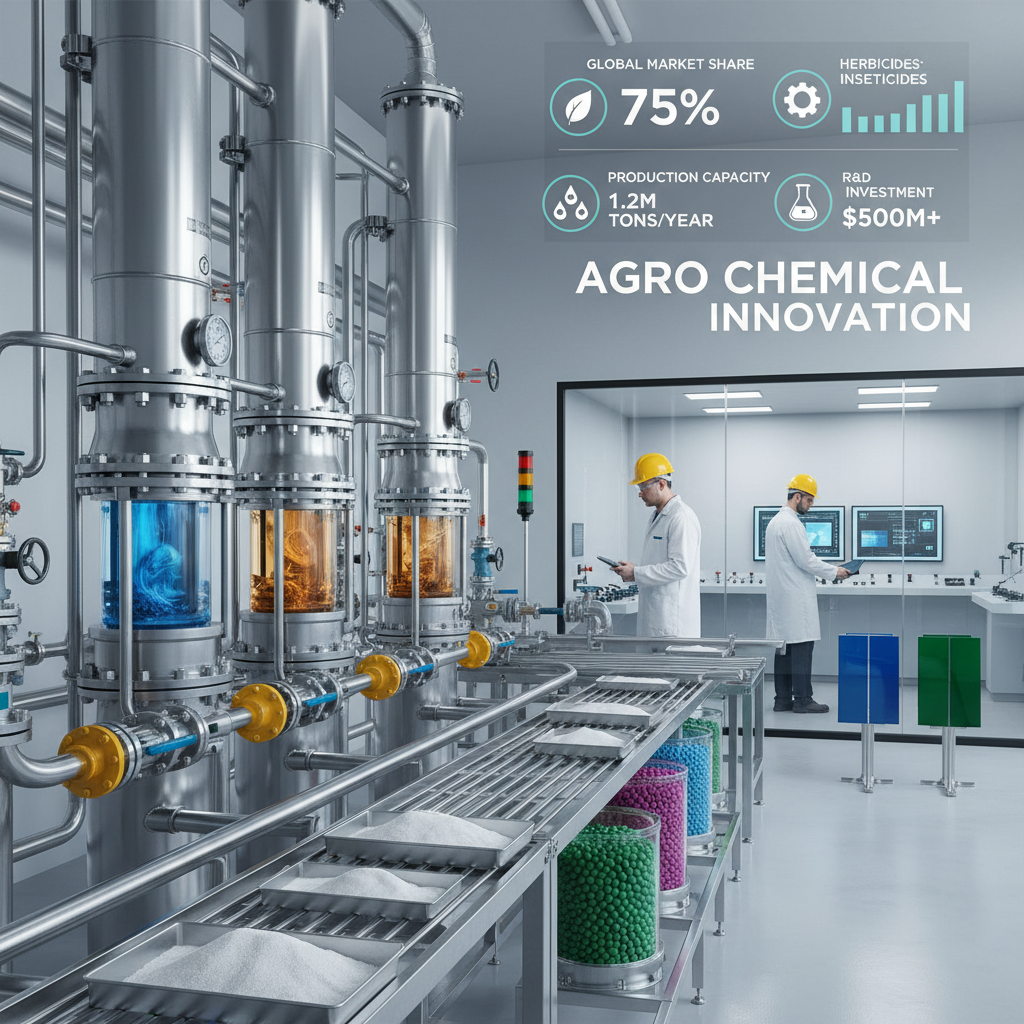
Agro chemicals are the backbone of modern agriculture, impacting everything from crop yields to food security on a global scale. We’re talking fertilizers, pesticides, herbicides – the tools that allow us to feed a growing population. It’s not just about boosting production, though; it’s about doing it sustainably and efficiently. The demand for these chemicals is constantly increasing, driven by population growth and the need to maximize output from existing farmland. Understanding the nuances of agro chemicals is vital for farmers, researchers, and policymakers alike.
The global agro chemicals market is a multi-billion dollar industry, heavily influenced by factors like climate change, evolving regulations, and technological advancements. According to the UN’s Food and Agriculture Organization, agricultural production needs to increase by 70% by 2050 to meet the demands of a projected 9.7 billion people. That’s a huge challenge, and agro chemicals are undeniably a key part of the solution. However, their use isn’t without its problems – environmental impact, resistance development in pests, and the cost for smallholder farmers are all significant concerns.
Ultimately, agro chemicals aren’t simply about applying a substance to a field. It's a complex interplay of science, economics, and environmental stewardship. It's about making informed decisions, embracing innovation, and ensuring that we can continue to produce enough food to sustain the planet, while minimizing the risks associated with these powerful tools. That’s what keeps me going, seeing how we can optimize these processes from the ground up.

The Global Significance of agro chemicals
You spend enough time on farm sites, and you quickly realize how critical agro chemicals are. It's not just about bigger harvests, it's about consistency. Farmers need to know they can reliably produce a yield, year after year. The world population is growing, arable land isn’t – we have to get more out of what we have, and properly utilized agro chemicals are a huge part of that equation. We’re seeing pressure from all sides: consumers demanding more affordable food, and a climate that’s becoming increasingly unpredictable.
The supply chain itself is complex. Getting the right chemicals to the right place at the right time requires meticulous planning and coordination. It’s not just about production, it’s about logistics, storage, and application. A failure at any point in that chain can have devastating consequences for farmers and food security. That's why robust quality control and efficient distribution networks are so vital to the entire system.
Defining agro chemicals: Beyond the Basics
When people say ‘agro chemicals’, a lot of folks immediately think pesticides, but it’s so much broader than that. We're talking about fertilizers providing essential nutrients for plant growth, soil conditioners improving soil structure, and even growth regulators that help optimize plant development. These aren't just separate entities, they work in conjunction, a carefully balanced system. You can't just throw a bag of fertilizer at a field and expect miracles. It has to be the right fertilizer, applied at the right time, in the right amount.
The connection to modern industry is undeniable. The production of agro chemicals is a sophisticated process, often involving complex chemical synthesis and formulation. It demands a highly skilled workforce and significant investment in research and development. It’s also intrinsically linked to humanitarian needs. Ensuring food security in developing countries relies heavily on access to affordable and effective agro chemicals, helping farmers increase their yields and improve their livelihoods.
From my experience walking fields with growers, I've learned that a clear understanding of these chemicals – what they do and how they do it – is the first step towards sustainable and productive agriculture. This isn't about blindly following instructions; it’s about applying knowledge and adapting to local conditions.
Key Components of Effective agro chemicals Application
First, you’ve got precision. We're moving away from blanket applications towards targeted treatments. Variable rate technology, GPS-guided sprayers, and drones are all playing a role in ensuring that chemicals are applied only where and when they’re needed. This minimizes waste, reduces environmental impact, and saves farmers money. It's about applying science, not just scattering product.
Then there’s formulation. The way a chemical is formulated – whether it’s a liquid, granule, or dust – significantly affects its efficacy and safety. Factors like particle size, solubility, and adhesion all play a role. I've seen firsthand how a poorly formulated product can be ineffective, or even damage crops. Good formulation science is about maximizing performance and minimizing risk.
Timing is critical. Applying a pesticide at the wrong stage of crop development, or under unfavorable weather conditions, can render it useless. Understanding the life cycle of pests and the growth stages of crops is essential for effective control. It’s about being proactive, not reactive.
Global Applications and Real-World Use Cases
You see agro chemicals used in drastically different ways depending on where you are in the world. In large-scale commercial farming in the US Midwest, it’s all about maximizing yield and efficiency with highly specialized equipment. In smaller, subsistence farms in Africa, it’s about protecting crops from devastating pests and diseases to ensure families have enough to eat. The challenges and solutions are vastly different.
In post-disaster relief operations, agro chemicals can play a critical role in helping farmers rebuild their livelihoods. Providing seeds and fertilizers to affected communities can help restore food production quickly. In remote industrial zones, managing invasive plant species with targeted herbicides is essential for protecting infrastructure and preventing ecological damage.
I’ve worked on projects in Southeast Asia where specific fungicides are essential to combat rice blast, a devastating fungal disease that can wipe out entire crops. It highlights how crucial these solutions can be for regional food security. These applications aren't one-size-fits-all; they require a deep understanding of local conditions and farming practices.
Effectiveness of Different agro chemicals Application Methods
Advantages and Long-Term Value Proposition
The biggest advantage, plain and simple, is increased yield. More food from the same amount of land – that’s a huge win. But it's not just about quantity. Improved quality of crops is also a significant benefit. Well-nourished plants are more resistant to disease and produce higher-quality yields. This translates to higher prices for farmers and better food for consumers.
From a sustainability perspective, precision application minimizes environmental impact, reducing the amount of chemicals released into the environment. And from a social impact standpoint, agro chemicals can empower farmers, particularly in developing countries, by increasing their income and improving their livelihoods. These tools create a sense of agency and control over their own food production.
Future Trends and Innovations in agro chemicals
We’re seeing a lot of exciting developments in biological control – using natural enemies of pests to manage populations. Think beneficial insects, fungi, and bacteria. These offer a more sustainable alternative to traditional chemical pesticides. Digital farming is also huge – using sensors, drones, and data analytics to optimize agro chemicals application.
Another big trend is the development of new formulations that are more targeted and efficient. Nano-encapsulation, for example, allows chemicals to be released slowly and precisely, reducing waste and maximizing effectiveness. The integration of AI and machine learning will further refine these processes, enabling us to predict pest outbreaks and optimize treatment strategies.
The focus is shifting from simply applying chemicals to managing entire agro-ecosystems, creating resilient and sustainable agricultural systems that can withstand the challenges of a changing climate.
Challenges and Sustainable Solutions for agro chemicals
Pest resistance is a major challenge. Pests evolve, and they become less susceptible to chemicals over time. That’s why it’s so important to rotate chemicals, use integrated pest management strategies, and develop new active ingredients. The environmental impact is another concern – runoff, soil contamination, and the potential harm to non-target organisms.
Sustainable solutions involve minimizing chemical use, promoting biological control, and adopting regenerative agriculture practices. Investing in research and development is critical, as is educating farmers about best practices. We also need to address the issue of access to agro chemicals for smallholder farmers in developing countries, ensuring they have the resources they need to improve their yields.
One of the biggest hurdles is shifting mindset – moving away from a reliance on quick fixes and embracing a more holistic, long-term approach to agriculture. It requires collaboration, innovation, and a commitment to sustainability.
Summary of Key Challenges and Solutions in agro chemicals Management
| Challenge |
Impact Area |
Solution Category |
Implementation Level |
| Pest Resistance |
Crop Production |
Integrated Pest Management |
Farm Level |
| Environmental Contamination |
Ecosystem Health |
Precision Application |
Technology-Driven |
| High Cost for Smallholders |
Economic Access |
Subsidies & Financial Aid |
Government/NGO |
| Regulatory Complexity |
Market Access |
Harmonized Standards |
International Cooperation |
| Limited Knowledge Transfer |
Effective Usage |
Farmer Training Programs |
Extension Services |
| Climate Change Impacts |
Crop Vulnerability |
Climate-Resilient agro chemicals |
Research & Development |
FAQS
The primary concerns revolve around water contamination from runoff, soil degradation due to overuse, and the impact on non-target organisms like pollinators and beneficial insects. Careful application techniques, integrated pest management, and the development of more environmentally friendly formulations are crucial to mitigate these risks. It’s about being mindful of the broader ecosystem and minimizing our footprint.
Farmers can implement integrated pest management (IPM) strategies, which involve a combination of biological control, cultural practices (like crop rotation), and the targeted use of pesticides only when necessary. Promoting healthy soil through composting and cover cropping can also enhance plant resilience and reduce pest pressure. It’s a shift towards a more holistic approach to pest control.
Absolutely. Biological control agents, like beneficial insects and microbial pesticides, are gaining traction. There's also growing interest in biostimulants – substances that promote plant growth and resilience without directly killing pests. And advancements in gene editing are opening up possibilities for developing crops that are naturally resistant to pests and diseases.
Climate change exacerbates pest and disease outbreaks, requiring farmers to use more agro chemicals to protect their crops. Changing weather patterns also affect the efficacy of chemicals, potentially requiring adjustments in application timing and dosage. Developing climate-resilient crops and adopting sustainable agro chemical practices are critical for adapting to these challenges.
Regulations are vital for assessing the risks associated with agro chemicals, establishing safe use guidelines, and monitoring their environmental impact. Strong regulatory frameworks ensure that chemicals are properly tested, labeled, and applied, protecting both human health and the environment. Continuous evaluation and refinement of these regulations are essential.
Agro chemicals should be stored in a secure, well-ventilated area, away from children and animals. Containers should be clearly labeled and kept tightly closed. Empty containers should be disposed of properly, following local regulations, often involving triple rinsing and recycling. Never pour chemicals down the drain or into waterways.
Conclusion
Agro chemicals are an indispensable part of modern agriculture, driving food production and addressing global food security challenges. However, their use demands careful consideration and a commitment to sustainability. The future of agro chemicals lies in precision, innovation, and a holistic understanding of agro-ecosystems – minimizing environmental impact, maximizing efficiency, and empowering farmers to thrive.
Looking ahead, continued investment in research and development, coupled with robust regulatory frameworks and farmer education, is essential. Let's embrace a collaborative approach, bringing together scientists, policymakers, and farmers to forge a path towards a more sustainable and resilient food system. To learn more about how we can help optimize your agro chemical strategies, visit our website: agro chemicals