Advanced GLP Report Compliance for US Agrochemicals

Accelerating market access in the United States through rigorous technical documentation and high-purity plant growth regulators.

Advanced GLP Report Compliance for US Agrochemicals

Providing comprehensive technical dossiers and premium active ingredients to meet the stringent EPA and USDA standards for American agriculture.

Agricultural Chemical Landscape in the United States

Navigating the complexity of EPA regulatory frameworks and diverse climatic demands.

The United States market is characterized by high-intensity industrial farming across the Midwest Corn Belt and diverse specialty crops in California and Florida. This geographical variance demands a sophisticated approach to Registration Support to ensure products are effective across varying soil types and temperature gradients.

Current regulatory trends emphasize the "reduced risk" pesticide program, pushing manufacturers toward highly specific plant growth regulators. The integration of precise chemistry is no longer optional but a requirement for maintaining competitiveness in the North American market.

Furthermore, the demand for transparency in toxicity and environmental impact studies has made the submission of a certified GLP Report a non-negotiable entry barrier for any chemical manufacturer seeking federal registration.
Evolution of Growth Regulator Technology

From broad-spectrum application to precision molecular targeting.

Market Development History

In the early 2000s, the US market relied heavily on generic hormonal stimulants with broad application ranges. However, the focus shifted around 2010 toward selectivity to reduce non-target environmental impact.

By 2015, the adoption of synthesized regulators like Uniconazole became pivotal for controlling vegetative growth in ornamentals and specialty crops, optimizing harvest efficiency.

From 2018 to the present, the industry has transitioned into the "Precision Ag" era, where chemical efficacy is paired with digital application tools to minimize waste and maximize yield.

Future Development Trends

Bio-Rational Integration

Integrating synthetic regulators with biological agents to create synergistic effects that lower the overall chemical load on the soil.

EPA-Driven Green Chemistry

A shift toward compounds with shorter half-lives and zero-residue profiles to comply with tightening US environmental legislation.

AI-Optimized Formulation

Using machine learning to predict the interaction between active ingredients and specific US crop cultivars to optimize dose timing.

Industry Outlook and Strategic Trends

Analyzing the trajectory of agrochemical manufacturing for the next 5 years.

Regulatory Digitalization
The transition to fully digital EPA submissions, increasing the demand for precise data formatting.
Molecular Customization
Developing tailored variants of Thidiazuron for specific cotton cultivars in the US South.
Sustainable Rooting
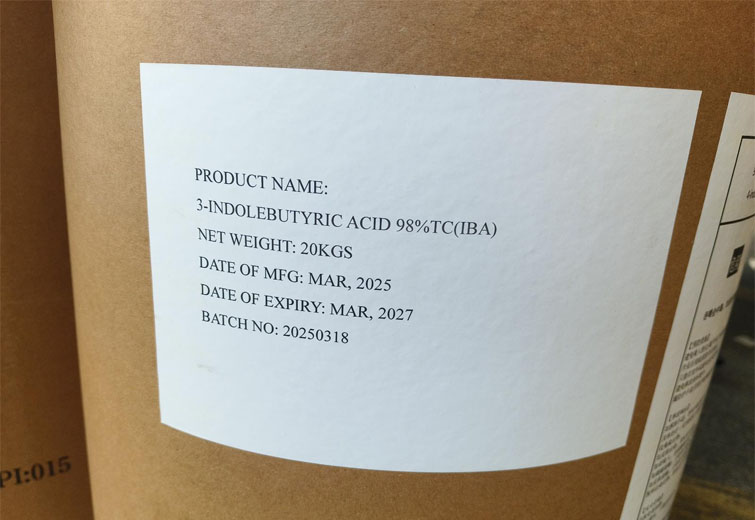
Increasing use of Indole-3-butyric acid for organic-certified propagation methods.
Toxicity Reduction
Shift toward ultra-low dose formulations to reduce the chemical footprint per acre.

Industry Outlook

Based on Google Search trends for "Sustainable Pesticides" and "EPA Crop Registration," there is a clear trajectory toward biological integration. We predict a 20% increase in demand for highly purified technical-grade growth regulators that can be blended with bio-stimulants.

The strategic focus for US manufacturers will be the reduction of "time-to-market." Companies providing integrated Registration Support alongside high-purity chemistry will dominate the supply chain.

Localized Application Scenarios in the USA

Practical deployment of growth regulators across key North American agricultural zones.

01. Midwest Corn & Soy Growth Control

Utilizing precision dose regulators to prevent lodging in high-yield corn belts, ensuring mechanical harvestability during the autumn window.

02. California Vineyards and Orchards

Applying Uniconazole to manage canopy growth and optimize sunlight penetration, improving grape quality for premium wineries.

03. Southern Cotton Defoliation

Implementation of Thidiazuron to synchronize leaf drop and fiber maturation in Texas and Georgia cotton fields.

04. Florida Ornamental Propagation

Using Indole-3-butyric acid in commercial nurseries to accelerate rooting of high-value tropical cuttings.

05. Federal EPA Compliance Filing

Integrating comprehensive Registration Support to navigate the 40 CFR Part 158 requirements for new chemical registrations.

Brand Story

Global Development Journey of Hebei Jiarun Technology Co., Ltd.

Foundation of Excellence

Established with a mission to bridge the gap between raw chemical synthesis and precision agricultural needs.

Quality Standardization

Implementing strict internal controls to match international GLP standards for technical grade products.

Global Market Expansion

Expanding our footprint into the North American market by focusing on high-purity plant growth regulators.

Regulatory Breakthroughs

Developing a specialized team to provide end-to-end dossier support for complex EPA registrations.

Future Vision

Striving to become the leading global partner for sustainable and compliant agrochemical solutions.

Complete Product Portfolio for the US Market

High-purity active ingredients backed by comprehensive technical documentation.

US Agrochemical Compliance FAQ

Expert answers to common technical and regulatory questions.

How does a GLP Report accelerate EPA registration?

A GLP report ensures that the data was generated in a Good Laboratory Practice environment, which is a mandatory requirement for the EPA to accept safety and efficacy data, thereby preventing costly data re-submissions.

What is the primary use of Uniconazole in US ornamentals?

It is primarily used as a growth retardant to maintain compact plant architecture and increase flower quality in commercial greenhouses.

Can Thidiazuron be used for non-cotton crops in North America?

While most common in cotton for defoliation, its use is subject to specific label registrations; our registration support can help determine legality for other crop types.

What concentration of Indole-3-butyric acid is recommended for rooting?

The concentration varies by species, but typically ranges from 500ppm to 2000ppm for optimal root induction in woody cuttings.

What does comprehensive Registration Support include for the US?

It includes the preparation of the technical dossier, toxicity data compilation, environmental fate studies, and guidance through the EPA's submission portal.

How do you ensure the purity of technical grade regulators?

We utilize advanced HPLC and GC-MS analysis to ensure that active ingredients meet the strict purity thresholds required for US federal registration.

Partner with Agrochemical Experts

Providing compliant, high-performance chemical solutions across the United States.

Contact Us Now

If you are interested in our products, you can choose to leave your information here, and we will be in touch with you shortly.