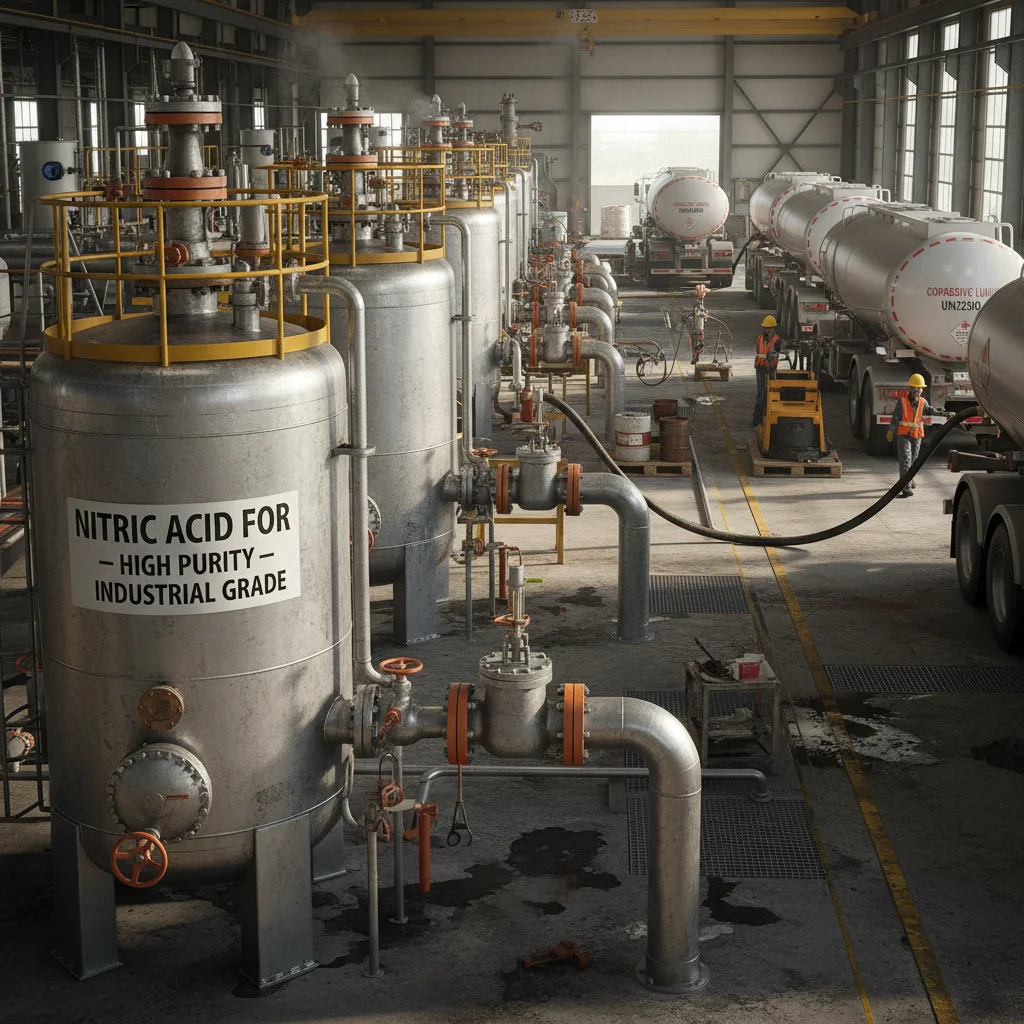
In the complex landscape of industrial chemistry, ammonium hydroxide serves as a fundamental pillar, facilitating a vast array of reactions across the agricultural and manufacturing sectors. Its versatility as a weak base makes it indispensable for pH regulation and chemical synthesis, ensuring that industrial processes remain stable and efficient on a global scale.
Understanding the nuances of ammonium hydroxide is critical for professionals in pesticide manufacturing and semiconductor fabrication, where precision is paramount. By balancing reactivity with safety, this compound enables the creation of high-performance herbicides and electronic cleaning agents that drive modern technological advancement.
Beyond its immediate chemical properties, the strategic application of ammonium hydroxide contributes to sustainable industrial growth. From enhancing the solubility of active ingredients in agrochemicals to supporting the purity of silicon wafers, its role is central to maintaining the equilibrium between high-yield production and environmental responsibility.

Global Industrial Relevance of Ammonium Hydroxide
On a global scale, ammonium hydroxide is recognized as a critical reagent that bridges the gap between raw chemical feedstocks and refined end-products. In the agricultural sector, specifically within the manufacturing of fungicides and herbicides, it is used to adjust the alkalinity of formulations, ensuring that active ingredients remain stable and effective during storage and application.
The demand for high-purity ammonia solutions has surged alongside the growth of the semiconductor industry, where it is utilized in the cleaning and etching of silicon wafers. This intersection of heavy industry and precision technology highlights the compound's versatility, moving from the vast fields of crop protection to the microscopic circuitry of integrated chips.
Defining Ammonium Hydroxide in Modern Chemistry
Simply defined, ammonium hydroxide is an aqueous solution of ammonia. Unlike strong bases such as sodium hydroxide, it provides a more controlled alkalinity, which is essential when dealing with sensitive polymers or volatile organic compounds. This characteristic makes it a preferred choice in laboratories and industrial plants where over-reaction could lead to product degradation.
In the context of humanitarian and food security needs, the compound plays a secondary but vital role in the production of nitrogen-based fertilizers. By facilitating the synthesis of nutrient-dense compounds, it indirectly supports the global effort to increase crop yields and combat food instability in developing regions.
Modern industry views this substance not just as a reagent, but as a tool for purification. Whether it is being used to precipitate metals from wastewater or to purify gases in syngas desulfurization, its ability to interact selectively with acidic components ensures a higher standard of purity for the final industrial output.
Core Components of Ammonium Hydroxide Performance
The effectiveness of ammonium hydroxide is largely determined by its concentration and purity levels. High-grade solutions are required for electronics, while industrial-grade versions suffice for large-scale pH adjustment in pesticide manufacturing.
Scalability is another core factor; the ability to produce and transport ammonia solutions safely allows factories to maintain continuous production cycles. The stability of the solution under varying temperature ranges ensures that the chemical potency remains consistent from the warehouse to the reaction vessel.
Cost efficiency is realized through the compound's high reactivity and low molecular weight. By using ammonium hydroxide, manufacturers can achieve the desired chemical shift using smaller volumes of material compared to bulkier organic bases, reducing both material costs and waste disposal overheads.
Practical Applications Across Global Sectors
In real-world contexts, ammonium hydroxide is deployed in diverse environments, from the high-tech hubs of East Asia to the agricultural heartlands of South America. In the semiconductor industry, it is a key component of "SC-1" cleaning solutions, which remove organic contaminants from wafer surfaces to ensure the reliability of microchips.
Furthermore, in the production of specialized chemicals like N-Methyl-Pyrrolidone (NMP), ammonia-based derivatives are often involved in the synthesis or purification stages. Whether it is acting as a catalyst or a neutralizing agent, the compound's presence is felt in everything from the lithium-ion batteries in electric vehicles to the protective coatings on precision instruments.
Ammonium Hydroxide Performance Metrics by Application
Long-Term Value and Sustainability Benefits
The long-term value of ammonium hydroxide lies in its ability to facilitate "green chemistry." Because it is a volatile base, it can often be removed from a reaction mixture through simple evaporation or distillation, leaving behind a pure product without the need for extensive water-washing steps that generate massive amounts of saline wastewater.
From a logical and emotional perspective, the shift toward safer, more controlled bases provides peace of mind to plant operators and enhances the dignity of the workforce by reducing exposure to more caustic, permanent hazards. The innovation in stabilization techniques ensures that this compound remains a reliable partner in the pursuit of high-efficiency chemical manufacturing.
Future Trends in Ammonium Hydroxide Innovation
Looking ahead, the integration of ammonium hydroxide into automated, closed-loop systems is a primary trend. By utilizing IoT sensors and precision dosing pumps, factories can minimize chemical waste and reduce the risk of accidental release, aligning production with stringent ESG (Environmental, Social, and Governance) goals.
Digital transformation is also enabling "smart synthesis," where the concentration of ammonia solutions is adjusted in real-time based on the purity of the incoming feedstock. This level of automation not only increases yield but also ensures that the energy footprint of the heating and cooling cycles is kept to an absolute minimum.
Furthermore, the rise of green hydrogen production may lead to the synthesis of "green ammonia," which would in turn produce a carbon-neutral version of ammonium hydroxide. This evolution would decouple the chemical industry from fossil fuel dependencies, creating a truly sustainable lifecycle for essential reagents.
Overcoming Challenges in Chemical Implementation
One of the primary challenges in using ammonium hydroxide is its volatility. The tendency of ammonia gas to escape the solution can lead to concentration drift and potential respiratory hazards for workers. To solve this, industry experts recommend the use of chilled storage tanks and pressurized delivery systems to maintain the chemical equilibrium.
Another limitation is the corrosive nature of the solution toward certain metals. The implementation of advanced fluoropolymer linings and stainless steel alloys in piping and reactors has mitigated these risks, extending the lifespan of industrial equipment and reducing maintenance downtime.
Finally, the regulatory landscape surrounding the transport of hazardous chemicals remains complex. By adopting standardized ISO tank containers and digitized tracking, companies can ensure compliance with international safety laws while maintaining the efficiency of their global supply chains.
Comparative Analysis of Ammonium Hydroxide Implementation Strategies
| Strategy Dimension |
Traditional Method |
Modern Innovation |
Impact Score (1-10) |
| Storage Control |
Open Atmospheric Tanks |
Pressurized Cold Storage |
9 |
| Dosing Accuracy |
Manual Batching |
Automated IoT Dosing |
10 |
| Waste Management |
Water Washing/Dilution |
Vacuum Distillation Recovery |
8 |
| Material Safety |
Carbon Steel Piping |
PTFE-Lined Alloy Steel |
9 |
| Purity Monitoring |
Periodic Lab Sampling |
In-line Refractive Indexing |
7 |
| Carbon Footprint |
Fossil-based Ammonia |
Green Hydrogen Synthesis |
10 |
FAQS
Ammonium hydroxide is a solution of ammonia in water, whereas liquid ammonia is pure ammonia cooled or pressurized into a liquid state. Ammonium hydroxide is generally easier to handle in dilute forms for pH adjustment, while liquid ammonia is used for large-scale industrial synthesis and refrigeration.
Yes, provided it is electronic-grade purity. It is a critical component in removing organic particles and adjusting the surface charge of silicon wafers. However, it must be used in a controlled environment with proper ventilation and PPE to ensure worker safety.
Absolutely. Because ammonia is volatile, it can be recovered from wastewater through air stripping or vacuum distillation. This not only reduces the environmental impact of nitrogen discharge but also lowers raw material costs by recycling the reagent back into the process.
To prevent the escape of ammonia gas, it should be stored in airtight, corrosion-resistant containers at low temperatures. Maintaining a cool environment reduces the vapor pressure of the ammonia, ensuring the concentration remains stable over longer periods.
It acts as a neutralizing agent or a pH stabilizer. Many herbicides require a specific alkalinity to remain soluble or to penetrate the plant cuticle effectively. Ammonium hydroxide allows chemists to fine-tune this balance without introducing unwanted metallic ions.
High-density polyethylene (HDPE), polypropylene, or PTFE-lined pipes are highly recommended. These materials resist the alkaline corrosion that would otherwise degrade standard carbon steel or aluminum piping over time.
Conclusion
In summary, ammonium hydroxide remains an indispensable tool in the modern industrial toolkit, bridging the gap between basic chemistry and high-tech application. From its critical role in semiconductor purity to its efficiency in agricultural formulations, the compound's balance of reactivity and volatility provides unparalleled value to manufacturers worldwide. By focusing on purity, scalability, and precise application, industries can maximize the utility of this versatile base while maintaining a commitment to safety and quality.
As we move toward a future defined by green chemistry and digital automation, the evolution of ammonia-based reagents will be central to sustainable development. We encourage industry professionals to adopt closed-loop recovery systems and explore green synthesis methods to further enhance the ecological profile of their operations. For those seeking high-quality chemical solutions and expert guidance in industrial reagents, we invite you to explore our comprehensive range of products. Visit our website: www.hbjrain.com