Insecticides are substances used to kill insects. Understanding their insecticides meaning is crucial in modern agriculture, public health, and environmental management. They play a vital role in protecting crops from pest damage, controlling disease vectors like mosquitoes, and safeguarding stored products. Effective and responsible use of insecticides, informed by a clear understanding of their mechanisms and impacts, is essential for sustainable practices.
Globally, the demand for insecticides is driven by increasing food production needs and the emergence of insecticide-resistant insect populations. According to the Food and Agriculture Organization (FAO), pests cause approximately 20-40% crop losses worldwide, highlighting the economic significance of pest control. The efficient use of insecticides, underpinned by a comprehensive grasp of insecticides meaning, can significantly mitigate these losses.
The proper understanding of insecticides meaning extends beyond simply knowing they kill bugs. It involves understanding their chemical composition, mode of action, target specificity, and potential environmental consequences. This knowledge is essential for making informed decisions about insecticide selection, application methods, and integrated pest management strategies.

The Role of Insecticides in Pest Control
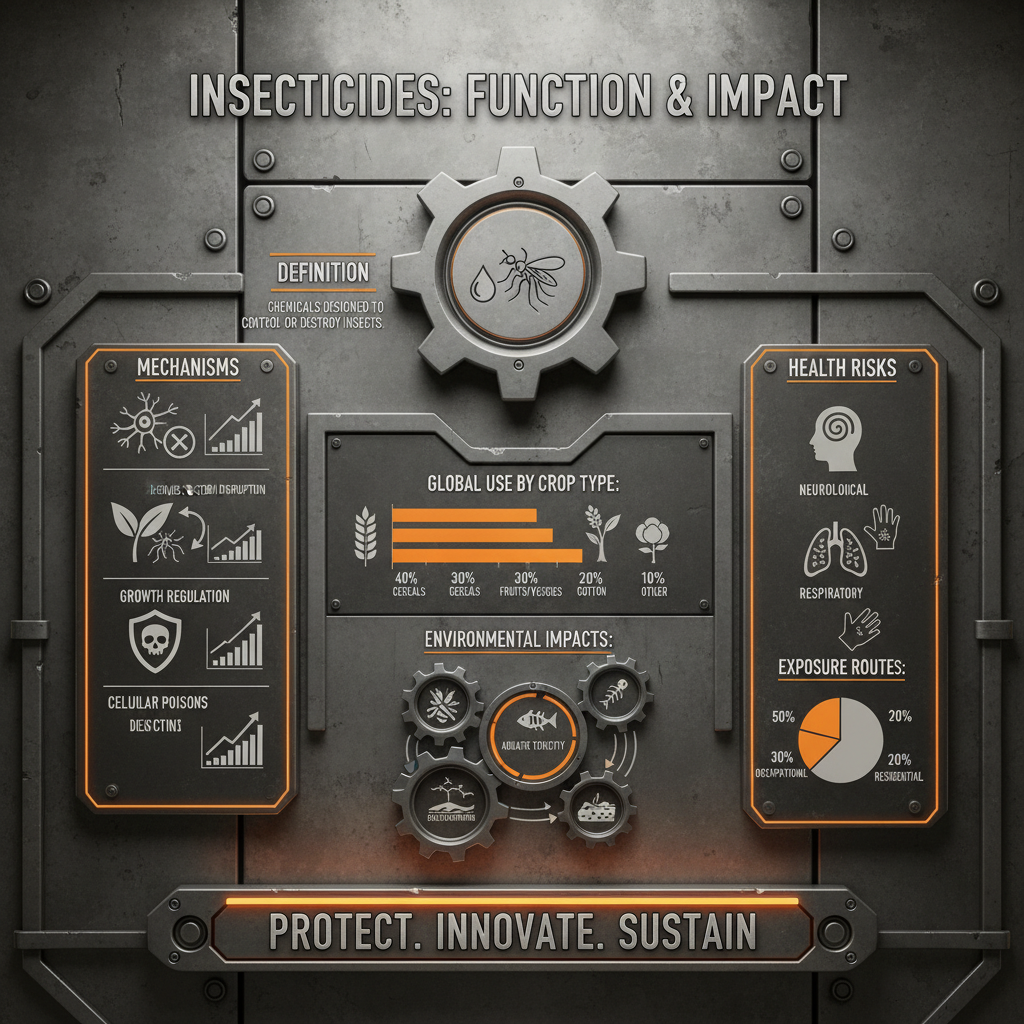
Insecticides are a cornerstone of modern pest control, playing a critical role in protecting agricultural yields and public health. Their insecticides meaning centers around disrupting the nervous systems of insects, leading to paralysis and death. Understanding this mechanism is fundamental to appreciating their power and the need for responsible application.
Beyond agriculture, insecticides are vital in controlling vectors of disease, such as mosquitoes (malaria, dengue fever) and ticks (Lyme disease). Effective vector control, reliant on a thorough grasp of insecticides meaning, significantly reduces the incidence of these debilitating and often fatal illnesses.
Defining Insecticides and Their Classes
At their core, insecticides meaning is the capacity to selectively target and eliminate insect pests. Insecticides are broadly categorized based on their chemical structure and mode of action. Common classes include organophosphates, carbamates, pyrethroids, and neonicotinoids. Each class exhibits different levels of toxicity, persistence, and target specificity.
Organophosphates and carbamates inhibit acetylcholinesterase, an enzyme vital for nerve function in insects. Pyrethroids disrupt sodium channels in nerve cells, leading to paralysis. Neonicotinoids act as agonists of nicotinic acetylcholine receptors, overstimulating the nervous system. Recognizing these differences in insecticides meaning is paramount for selecting the most appropriate insecticide for a given situation.
Furthermore, biological insecticides, derived from natural sources like bacteria (Bacillus thuringiensis - Bt) or fungi, represent a more environmentally friendly approach. While generally less potent than synthetic insecticides, they offer a targeted approach with reduced off-target effects, illustrating the evolving understanding of insecticides meaning.
Factors Influencing Insecticide Effectiveness
The effectiveness of an insecticide is not solely determined by its inherent toxicity. Several factors can significantly influence its performance, including environmental conditions, insect resistance, and application technique. Understanding these factors is central to grasping the true insecticides meaning in practical terms.
Insecticide resistance, a growing global concern, arises from the natural selection of insects with genetic mutations that confer tolerance to specific insecticides. Over-reliance on a single insecticide class accelerates the development of resistance, diminishing its insecticides meaning over time. Integrated pest management (IPM) strategies, incorporating insecticide rotation and alternative control methods, are crucial for mitigating resistance.
Environmental factors, such as temperature, humidity, and rainfall, can also affect insecticide efficacy. High temperatures can accelerate insecticide degradation, while rainfall can wash away applied insecticide before it has a chance to act. Proper timing of application, considering these factors, is essential for maximizing the insecticides meaning of the treatment.
Global Insecticide Application & Impact
Insecticide application varies significantly across the globe, influenced by agricultural practices, climate, and economic factors. Asia accounts for the largest share of global insecticide use, driven by intensive rice and vegetable production. The insecticides meaning within these regions is often tied to preventing substantial crop losses and ensuring food security.
However, widespread insecticide use has significant environmental consequences, including non-target effects on beneficial insects (pollinators, predators), water contamination, and impacts on human health. The balance between agricultural productivity and environmental sustainability is a key challenge in understanding the full insecticides meaning.
Global Insecticide Consumption by Region
Advantages of Modern Insecticide Use
Modern insecticides, developed through rigorous research and testing, offer significant advantages over older generations of pesticides. Increased target specificity minimizes harm to non-target organisms, while lower application rates reduce environmental burden. Properly understood insecticides meaning is therefore, directly linked to sustainable agricultural practices.
Advancements in formulation technology have also improved insecticide efficacy and reduced drift, enhancing their overall performance. These improvements, reflecting a deeper understanding of insecticides meaning, contribute to increased crop yields and improved public health outcomes.
Future Trends in Insecticide Technology
The future of insecticide technology is focused on developing more sustainable and targeted solutions. RNA interference (RNAi) technology, offering a highly specific mode of action, holds promise for controlling insect pests without harming beneficial organisms. This innovative approach redefines insecticides meaning, moving towards genetic-level control.
Biopesticides, derived from natural sources, are also gaining prominence, driven by increasing consumer demand for organic and environmentally friendly products. Precision agriculture techniques, utilizing sensors and data analytics, enable targeted insecticide application, minimizing off-target effects and maximizing efficacy, shaping the broader understanding of insecticides meaning.
Nanotechnology is also being explored for delivering insecticides more effectively and reducing environmental contamination. These advancements highlight a shift towards smarter, more sustainable pest management strategies.
Challenges and Sustainable Solutions
Despite advancements, significant challenges remain in insecticide use. Insecticide resistance, environmental contamination, and human health risks continue to pose concerns. Addressing these challenges requires a holistic approach centered around integrated pest management (IPM).
IPM emphasizes the use of multiple control tactics, including biological control, cultural practices, and judicious insecticide application, minimizing reliance on chemical control and promoting long-term sustainability. Understanding the complexities of insecticides meaning, including their limitations and potential risks, is crucial for successful IPM implementation.
Promoting research and development of novel insecticides with novel modes of action, alongside stricter regulations and responsible application practices, are essential for mitigating the negative impacts of insecticide use and ensuring a sustainable future for agriculture and public health.
Summary of Challenges & Sustainable Solutions
| Challenge |
Severity |
Potential Impact |
Sustainable Solution |
| Insecticide Resistance |
High |
Reduced insecticide efficacy, crop losses |
Insecticide rotation, IPM strategies |
| Non-Target Effects |
Medium |
Harm to beneficial insects, ecosystem disruption |
Selective insecticides, biological control |
| Environmental Contamination |
Medium |
Water pollution, soil degradation |
Reduced application rates, precision agriculture |
| Human Health Risks |
Low to Medium |
Acute and chronic health effects |
Protective equipment, stricter regulations |
| Limited Access to Information |
Medium |
Improper use, increased risks |
Extension services, farmer training |
| Regulatory Gaps |
Medium |
Unsafe products, environmental damage |
Strengthened regulations, enforcement |
FAQS
Insecticides are primarily designed to control insect populations that cause damage to crops, spread diseases, or are otherwise considered pests. Understanding their specific insecticides meaning involves recognizing that they disrupt essential biological processes in insects, leading to their death. The goal isn't simply eradication, but sustainable population management to minimize negative impacts.
Insecticide resistance arises through natural selection. When insects are repeatedly exposed to the same insecticide, those with genetic mutations that confer some level of tolerance are more likely to survive and reproduce. Over time, these resistant genes become more prevalent, reducing the insecticides meaning and effectiveness of the insecticide. Rotation of insecticide classes is crucial to mitigating this.
No, insecticides vary significantly in their environmental impact. Some are highly persistent and can accumulate in the food chain, while others break down more quickly. The insecticides meaning when assessing environmental harm includes considering factors like toxicity to non-target organisms, water solubility, and potential for bioaccumulation. Newer generation insecticides are often designed to be more selective and environmentally friendly.
Integrated Pest Management (IPM) is a holistic approach to pest control that combines multiple strategies, including biological control, cultural practices, and judicious insecticide use. It’s about understanding the ecosystem and minimizing reliance on chemical control. The core insecticides meaning within IPM is to use insecticides strategically, only when necessary, and in combination with other control methods.
Reducing risks involves following label instructions carefully, using appropriate personal protective equipment (PPE), and applying insecticides only when necessary. Proper storage and disposal are also critical. Understanding the specific insecticides meaning for each product, and choosing the least toxic option whenever possible, are key to minimizing potential harm.
Biopesticides are derived from natural sources, such as bacteria, fungi, or plant extracts. They generally have a narrower spectrum of activity and are less toxic to non-target organisms than synthetic insecticides. The insecticides meaning in biopesticides relies on natural mechanisms to control pests, making them a more sustainable alternative in many situations, albeit potentially with lower immediate impact.
Conclusion
Understanding the insecticides meaning is far more complex than simply knowing they kill insects. It encompasses their chemical properties, modes of action, environmental impacts, and the ever-evolving challenges of resistance. Modern pest management demands a nuanced approach, integrating diverse strategies and prioritizing sustainability. A comprehensive grasp of these factors is essential for responsible and effective pest control.
Looking ahead, continued research and development of novel insecticides, coupled with stricter regulations and the widespread adoption of IPM practices, are critical for safeguarding both agricultural productivity and environmental health. By embracing innovation and prioritizing sustainability, we can ensure that insecticides remain a valuable tool in the fight against pest-related challenges, while minimizing their potential negative consequences.